An embassy or consulate posting in Israel usually arrives with three fixed facts: a residence you did not choose, a household shipment that clears customs on its own timetable, and an end date everyone knows from day one. Storage for diplomats exists for the space between them. Whether your effects are released before the residence is ready, the official furniture leaves no room for your own, or the handover to your successor falls weeks before your flight, a private unit gives your belongings a fixed address that does not depend on the housing calendar. This guide covers what a posting actually needs, how to choose a unit near your mission in Jerusalem or Tel Aviv, and the practical points worth settling before you sign.

A posting is not a move in the ordinary sense. You know roughly when it ends, you rarely chose the house, and a good part of what surrounds you belongs to the mission rather than to you. That combination produces a storage need that is unusual in two ways. First, the period is defined but not exact, because rotation dates shift by months. Second, the volume is often modest: not a whole apartment, but the part of your own life that a furnished residence cannot absorb.
The practical answer is a private unit rented in your own name, sized for what genuinely has to wait, on a commitment track that matches the part of the posting you can predict. Everything else, the mission paperwork, the shipping agent, the residence inventory, stays separate from it. Treating the unit as your own address rather than an extension of the mission is what keeps it simple when the rotation date moves.
Almost every storage question from mission staff comes down to one of three moments: arrival, the middle of the posting and departure. They look nothing like each other, and they call for different unit sizes and different rental lengths, which is why it is worth deciding which one you are actually solving before you book anything.
Sea freight and housing almost never arrive in step. A consignment booked months in advance is released on its own timetable, while the residence may still be in renovation, between occupants or waiting on an inventory check. Rather than paying an agent to hold your crates, or filling a temporary flat with boxes you cannot open, you can move the whole consignment into a unit and unpack it in stages once the keys are in your hand. In practice this turns a stressful fortnight into an ordinary logistics question.
Furnished residences come with their own inventory, and your personal furniture, rugs and pictures still have to go somewhere. The same is true of whatever you carried from a previous posting and do not need here: winter coats, sports gear, a child’s bike that is now too small, a collection you would rather not leave in a house where official guests come and go. A small to medium unit takes all of it out of the residence without sending it back home at freight prices.
The end of a posting compresses everything into a few weeks. The residence has to be handed back complete, your successor may land before your own flight, and the outbound shipment is collected on a date set by the agent rather than by you. Keeping a unit for the final month lets you clear the house on the official date and release your crates later, calmly, instead of packing under pressure in a home that is no longer yours.
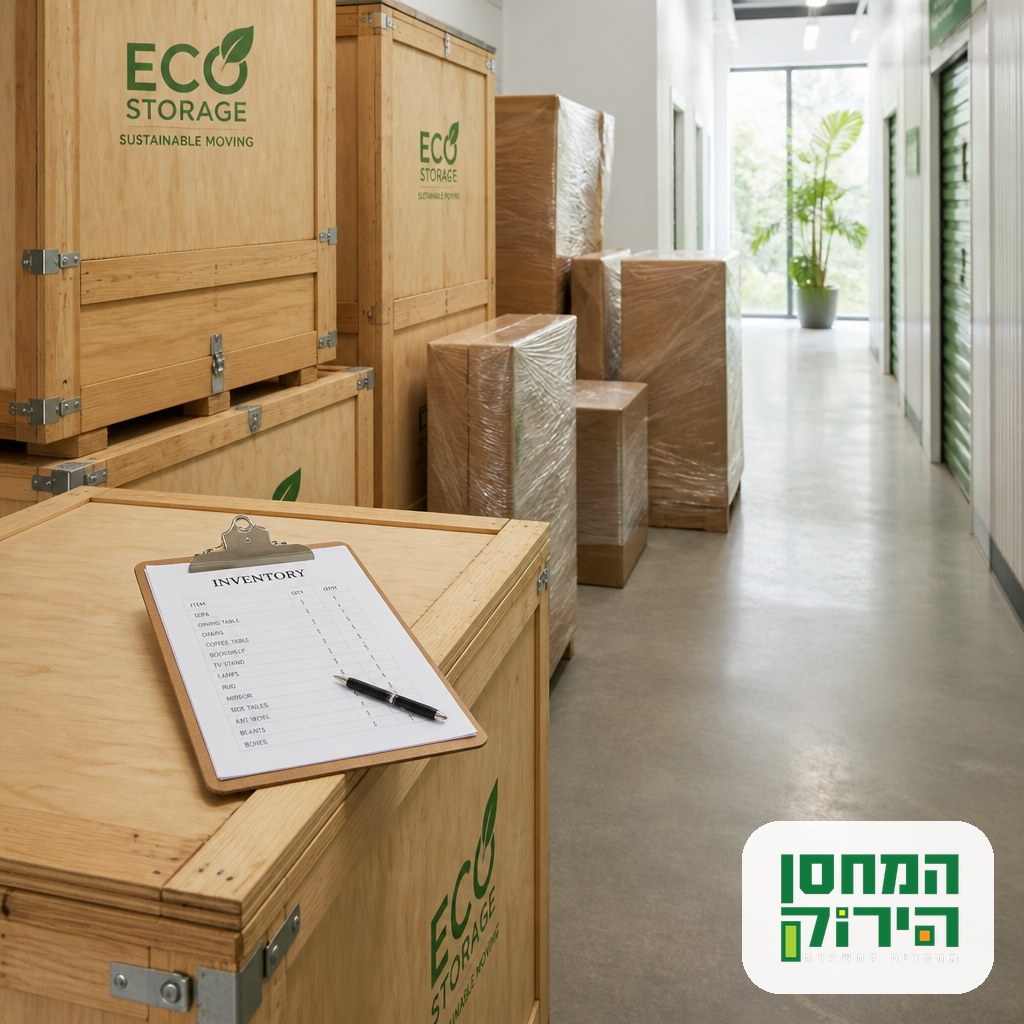
For anyone posted to Jerusalem, the closest option is the Kiryat Anavim branch, at the Route 1 interchange just west of the city. It is about 16 minutes from the city centre without traffic, about 14 from Ramot and Malha and about 11 from Beit HaKerem, which makes it easy to reach on the way in or out of town. Sizes and availability for that branch are listed with the storage spaces for rent in Jerusalem, and the branch is open Sunday to Thursday, 09:00 to 17:00, closed Friday and Saturday.
If your mission is in Tel Aviv, there are two branches to choose between. Florentin, at 50 Florentin Street, is open Sunday to Thursday 09:00 to 19:00 and Friday 09:00 to 13:00. The Kibbutz Galuyot branch, at 34 Kibbutz Galuyot Road, is the one with 24/7 access, which is the practical choice if your working day rarely ends before the shutters come down. Both appear on the page for storage rentals in Tel Aviv, and a third option, the Sharon branch at Kibbutz Yakum, suits anyone living north of the city.
Access matters more on a posting than it does for ordinary storage, because your hours are not always your own. Only the Kibbutz Galuyot branch in Tel Aviv offers 24/7 access. The other branches are open during posted hours, and at the Sharon branch in Kibbutz Yakum that means seven days a week from 06:00 to 22:00. The unit itself is entirely yours: you fit your own padlock, and you are the only person holding a key to it.
The rental agreement is signed by a person rather than by a mission, and whoever signs is the one who holds the lock and the access. If the cost is to be reimbursed or invoiced through your office, settle that with your own administration before you sign, because billing and tax arrangements for mission staff are decided by the mission and not by a storage provider. The same applies to anything touching the customs status of an inbound consignment: your shipping agent is the right address for that question, not us.
Contents cover is worth settling at the same time. It is bought separately from the storage fee, as a comprehensive add-on on the full declared value you state, and it covers earthquake damage as well. For household effects that have already crossed two or three borders, declaring a realistic value is usually worth far more than the small addition to the monthly cost. Diplomats and other foreign residents using self storage in Israel tend to under declare simply because the list is long, and that is the one thing worth taking the time to get right.
Finally, a short list stays out of the unit whatever the posting: fresh or perishable food, flammable and hazardous materials, gas, fuel, plants and animals. Passports, documents, jewellery and anything of high sentimental value belong with you rather than in storage. For everything else the rule is simple: if being without it for a month would bother you, keep it at hand, and send the rest ahead.
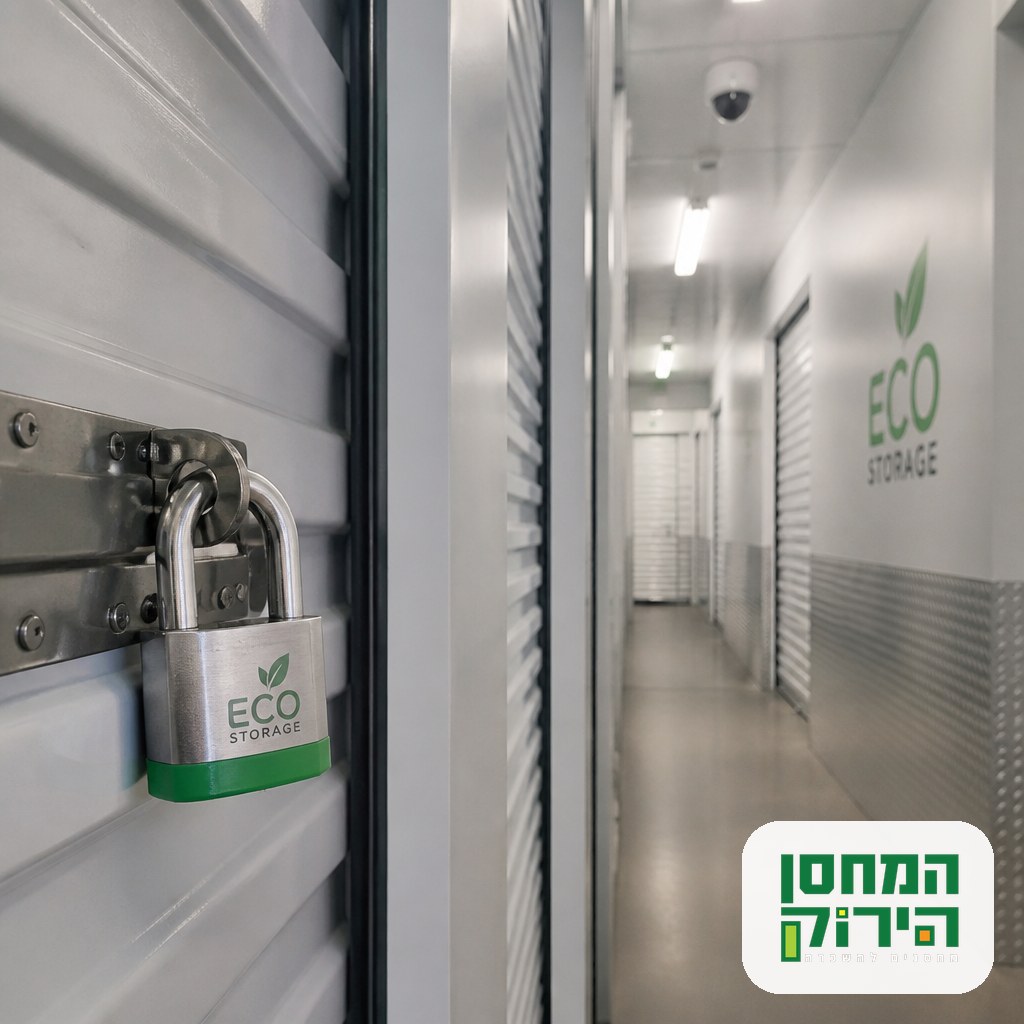
A posting has a start date, an end date and a great deal of movement in between, and very little of that movement is under your control. A private unit rented in your own name eases all three moments: it holds the inbound consignment until the residence is ready, it keeps your own belongings out of a furnished official house, and it lets you hand that house back on the official date instead of the day your crates are collected. Unit sizes and commitment tracks are set out on the storage unit price list. Get in touch and our team will match a unit to the length of your posting and to the branch closest to your mission.
Yes, and that is the usual arrangement. The agreement is signed by an individual, who then holds the padlock and the access to the unit. If your office needs to be invoiced or to reimburse you, arrange that internally before signing, because the rental itself is a straightforward contract between you and us.
There are three commitment tracks: no commitment at all, six months to a year, and over a year. When the end date is genuinely uncertain, start on the flexible track even though the monthly cost is higher, then move to a longer track once the rotation is confirmed. It is far easier to extend than to be locked into a date that changed.
Kiryat Anavim, at the Route 1 interchange west of the city, is the branch serving the whole Jerusalem area. It is roughly 16 minutes from the city centre without traffic, and under 20 from Talpiot and Pisgat Zeev. Beit Shemesh, Modiin, Mevaseret Zion and Maale Adumim are all served from the same branch.
Yes. The Kibbutz Galuyot branch in Tel Aviv has 24/7 access, so you can reach your unit before or after a working day of any length. The Sharon branch at Kibbutz Yakum is open seven days a week from 06:00 to 22:00, and Florentin and Kiryat Anavim follow standard opening hours.
Cover is not part of the storage fee. Comprehensive contents cover is available as an add-on on the full declared value, including earthquake damage, at ₪1.8 per ₪1,000 of declared value. For a household shipment that has already travelled, it is worth listing the contents properly and declaring a value you would actually want back.
Yes. At the Sharon branch in Kibbutz Yakum there is parking right beside the units, truck access and entry with your personal key without an appointment, so a crew can load or unload in one visit. At the other branches, plan the delivery inside posted opening hours and allow time for the crew to work through the building rather than straight off the street.

How can we help you today?