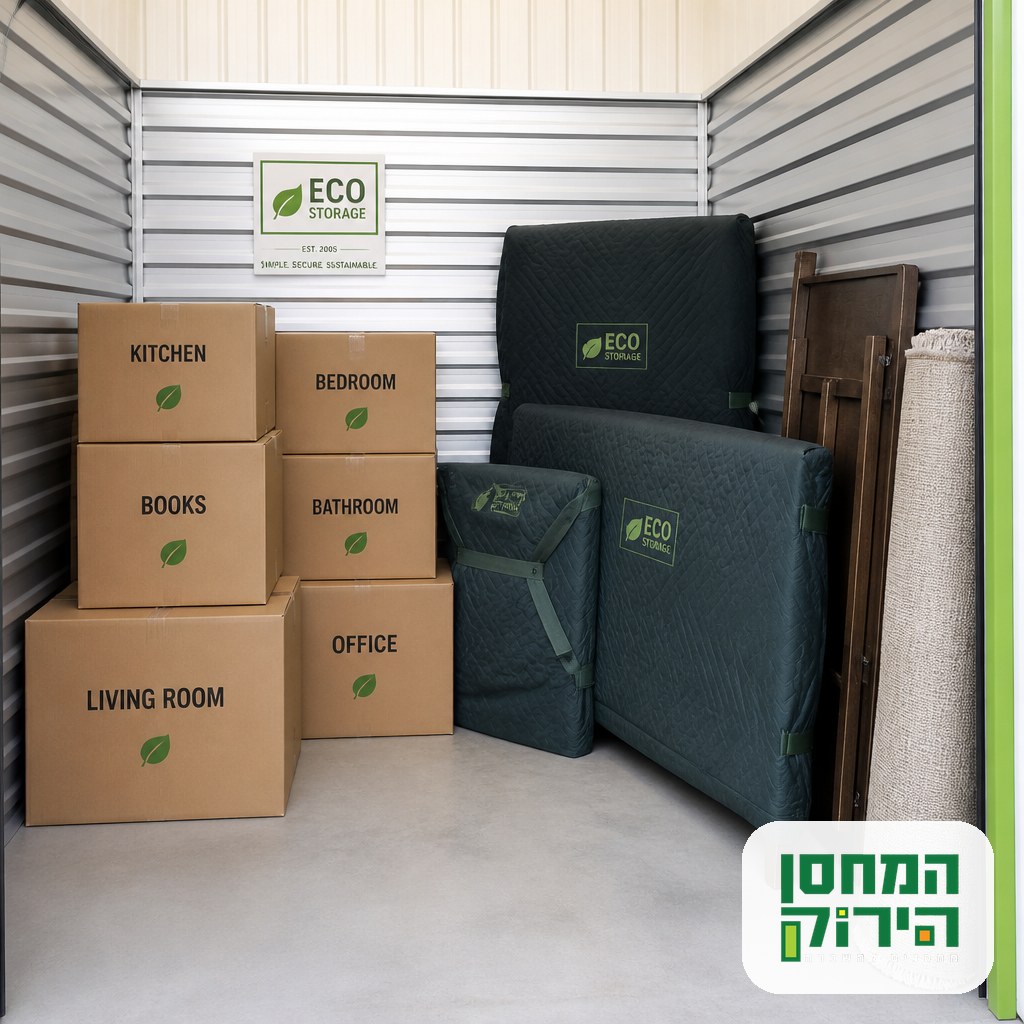
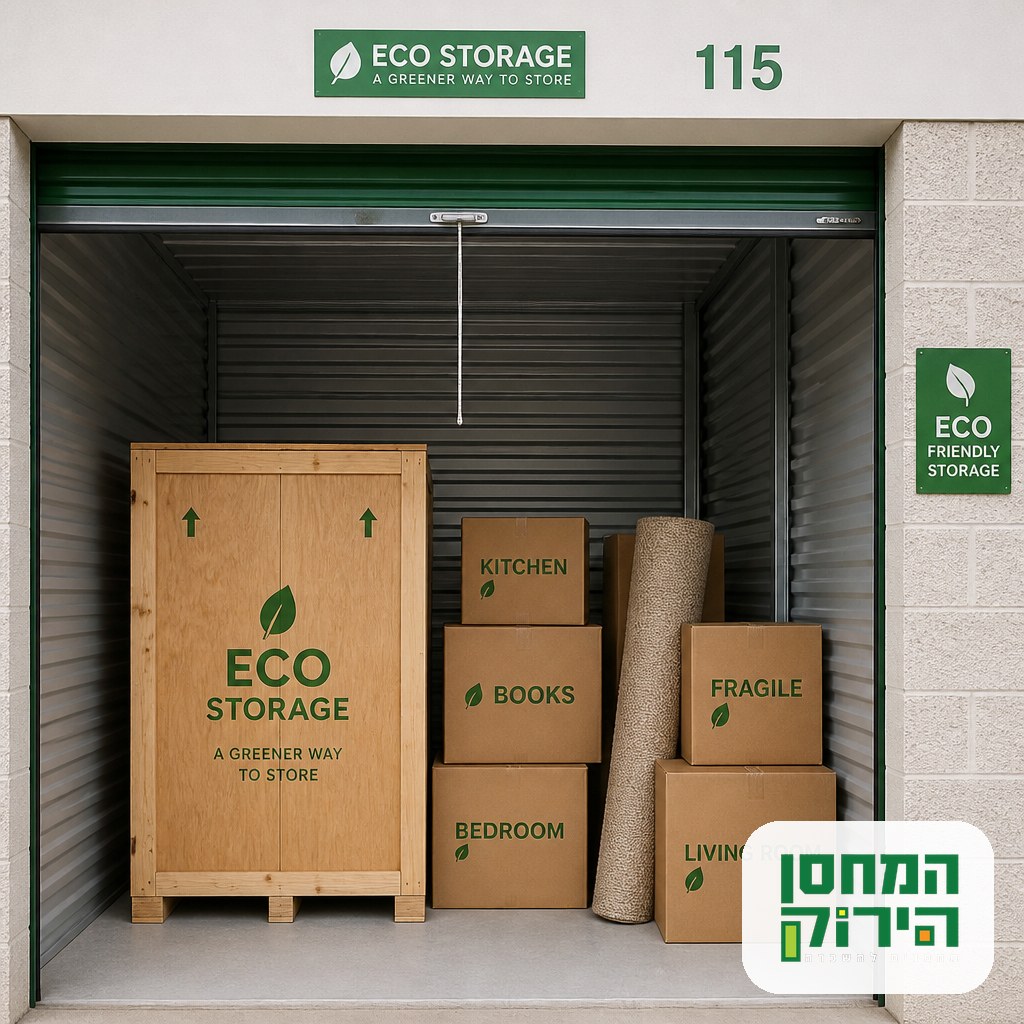
A personal library is usually the heaviest and most sentimental thing people put into storage, and the least forgiving. Book storage looks simple, because books sit still and ask for nothing, but paper absorbs moisture from the air and releases it again, glue hardens and covers fade in daylight. In Israel that matters more than in most places: coastal humidity in summer, sealed rooms that reach very high temperatures, and apartments that rarely have a cool dry basement. This guide covers what really damages books in storage, how to pack a box that will not collapse, and how to arrange the boxes so the collection comes out as it went in.

A book is a composite object: paper, board, cloth, glue and sometimes leather, and each material reacts differently to a change in its surroundings. Paper is hygroscopic, drawing moisture out of humid air and giving it back when the air dries. That constant movement makes pages ripple, boards warp and spines lose their straight line, long before anything looks obviously wrong.
A second process runs quietly underneath. Most books printed in recent decades use paper with residual acid, which slowly breaks down the fibres. That happens anyway, but warmth and damp accelerate it sharply, which is why a book kept cool and stable still looks fine a decade later while the identical book left in a hot sealed room yellows and turns brittle.
The third factor is mechanical. Books are extremely heavy for their volume, so a large box filled to the top can split at the seams or crush whatever sits beneath it. Any plan for a whole library has to handle weight and stacking, not only climate.
Almost every damaged box we see comes down to four causes. Each one has a straightforward fix.
Moisture is the main threat to paper. Books are comfortable at roughly 40 to 55 percent relative humidity. Above about 60 percent, paper holds enough water for airborne mould spores to germinate and spread. Along the Israeli coast, an unventilated room in August combines high humidity with high heat, the worst possible pairing for a library.
The useful part is that mould does not appear overnight. It starts with small spots and a faint musty smell, so anyone who opens a box occasionally catches it long before it reaches the whole collection.
The first sign is almost always smell: a stale, cellar-like odour that rises as soon as you open the box. Visual signs follow, usually small rust coloured spots along the page edges, known as foxing. A grey or whitish film on the cover that looks like fine dust is active mould.
Dry it first. Move the book to a shaded, well ventilated spot, fan the pages open and let air move between them for a day or two, with no direct sun and no hair dryer, which warps paper. Only once it is completely dry, brush the residue away with a soft brush, outdoors, so the spores do not scatter indoors.
A book with active mould must come out of the box straight away. Mould travels easily between covers that touch, and one book can contaminate an entire carton. Keep it apart until treated, then air and inspect the rest of the box one title at a time before repacking.
Heat accelerates the breakdown of paper and dries out the glue holding the spine. In a space that reaches forty degrees in summer, binding adhesive can harden until pages release as soon as the book is opened. Direct sunlight fades covers and yellows exposed page edges. A closed, shaded unit at a reasonably steady temperature beats a rooftop store room, a balcony cupboard or a garage.
Paper and glue feed several insects, silverfish above all, and they thrive in the same dark damp conditions that encourage mould. They rarely destroy a book outright, but they graze page edges and bindings and leave small holes. Prevention is the same as for mould: keep everything dry, never pack food residue, and do not store old damp cartons beside the books.

Packing decides most of the outcome. Books packed properly survive long periods without trouble, while books pushed into a box in a hurry suffer even in an excellent space. Work in a fixed order.
A small strong box always beats a large one. A medium carton filled with books reaches a weight that is hard to lift safely, and the bottom tends to give way at the worst moment. A simple rule: if you are wondering whether a box is too heavy, it is. Uniform sizes also stack far more stably.
Hardcovers keep best lying flat, stacked with the spines alternating, so weight spreads across the cover instead of resting on the spine. Paperbacks can stand upright as they would on a shelf, packed closely enough not to lean but never forced in. Avoid storing a book on its fore edge or left open, since both distort the binding within weeks.
If the bookcase itself is going into storage, take it apart rather than moving it loaded. As part of storage for furniture and household items, shelves travel far better lying flat and protected than relying on the fixings to hold.
Layout matters as much as packing, especially when books share the unit with a whole household. A few simple rules do most of the work:
If the books are one part of a household going into self storage units, give them a single fixed corner rather than scattering cartons between the furniture, so they are easier to air, inspect and retrieve.
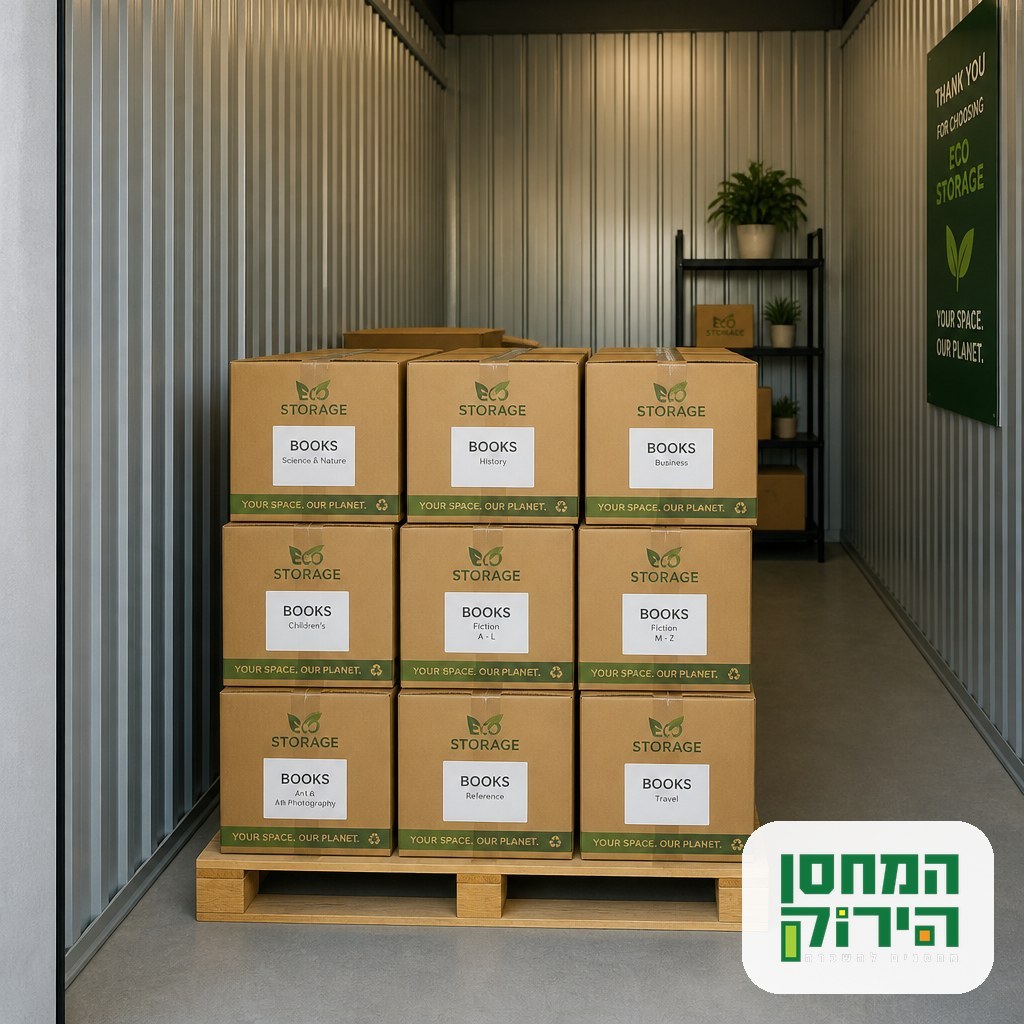
A library going away for a year or more deserves extra preparation. In a stable enclosed space paper barely notices the passage of time, but pack so that nothing needs attention later: everything bone dry, and a desiccant sachet in boxes of valuable volumes, replaced per the manufacturer’s instructions if you have access to the unit. For long term storage, keep a simple list of what is in each box so you never open five cartons to find one title.
This matters most for people making aliyah or relocating, whose books often arrive months later by sea container after weeks in fluctuating humidity. Open, check and air those cartons before they go into a unit rather than storing them sealed. Institutional and professional libraries follow the same principles at a different scale, where labelled shelving and an inventory matter more than saving floor space.
Most of the damage we see traces back to four repeated mistakes, and all of them are easy to avoid:
A fifth mistake gets less attention: packing books beside liquids or anything strongly scented, such as cleaning products. Paper absorbs odours readily and releases them very slowly, so a book that picks up the smell of detergent can keep it for months.
Good book storage comes down to three things: make sure the books are dry before packing, use small strong boxes with proper wrapping for valuable volumes, and keep them in an enclosed, shaded, stable space that is not damp. A book given those conditions will spend years in storage without losing anything. If you are planning to put a whole library away and want help choosing a unit size and understanding the conditions, contact our team through the Green Storage contact page.
In a dry, shaded, stable unit there is no practical time limit, and books pass years with no noticeable change. Conditions decide the outcome, not the calendar: two months in a hot damp space does more harm than three years in a unit that stays dry.
Usually not. For ordinary books, careful packing and filling the gaps is enough. Individual wrapping in plain paper is for valuable volumes, older books, leather bindings and anything with a fragile cover.
Hardcovers are best stored flat, stacked on top of each other, so the weight spreads across the cover rather than the spine. Paperbacks can stand upright if they are packed closely enough not to lean, but never forced in and never resting on the fore edge.
That smell comes from moisture trapped in the box. Make sure every book is fully dry before packing, use cardboard rather than sealed plastic, raise the boxes off the floor and leave a gap for air around them. A desiccant sachet helps in boxes of valuable books.
Yes, and that is the usual arrangement. Give the books their own area at the base of the stack, keep them out from under anything that might leak, and avoid storing them beside cleaning products or scented items the paper will absorb.
Yes. We offer comprehensive insurance cover for stored contents, including rare events such as earthquake, so a valuable book collection is protected too. The rate is 1.8 NIS per month for every 1,000 NIS of declared value, and the cover amount can be matched to the value of what you store.

How can we help you today?