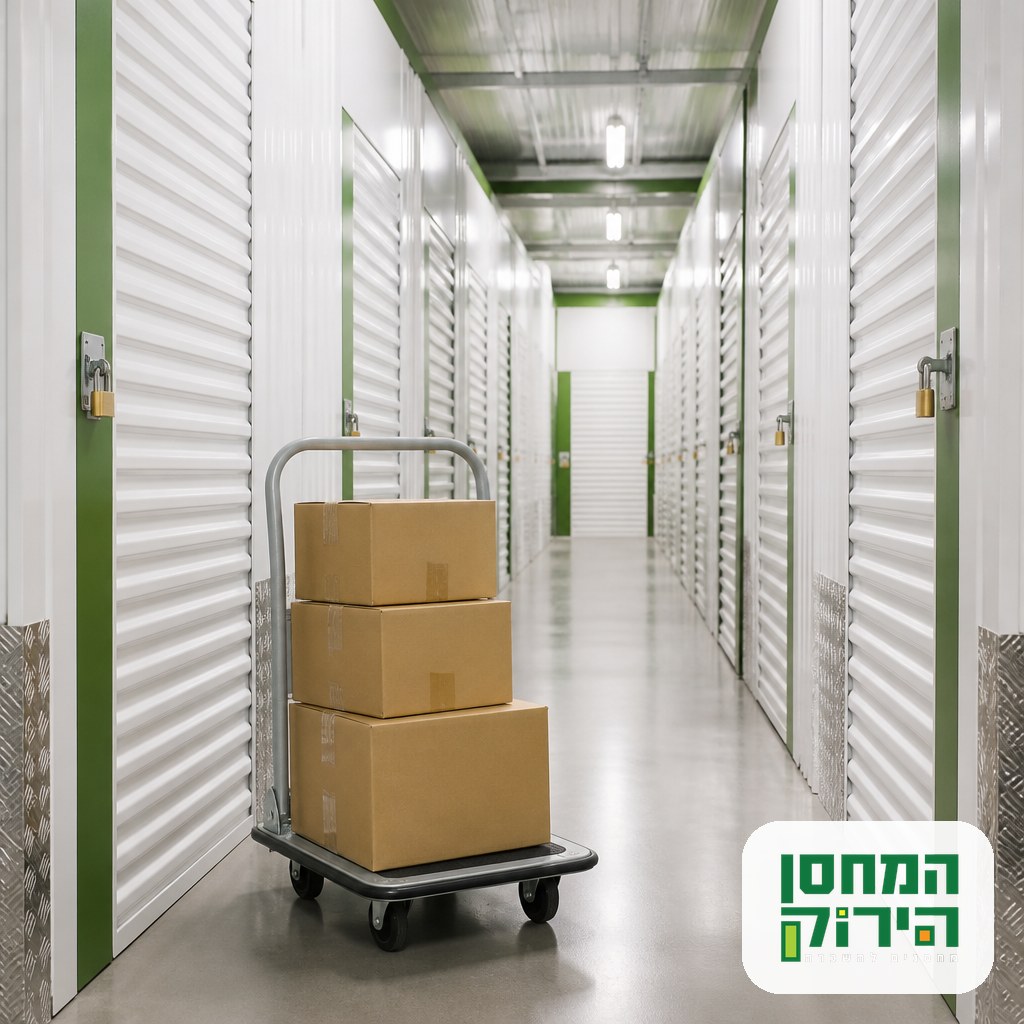
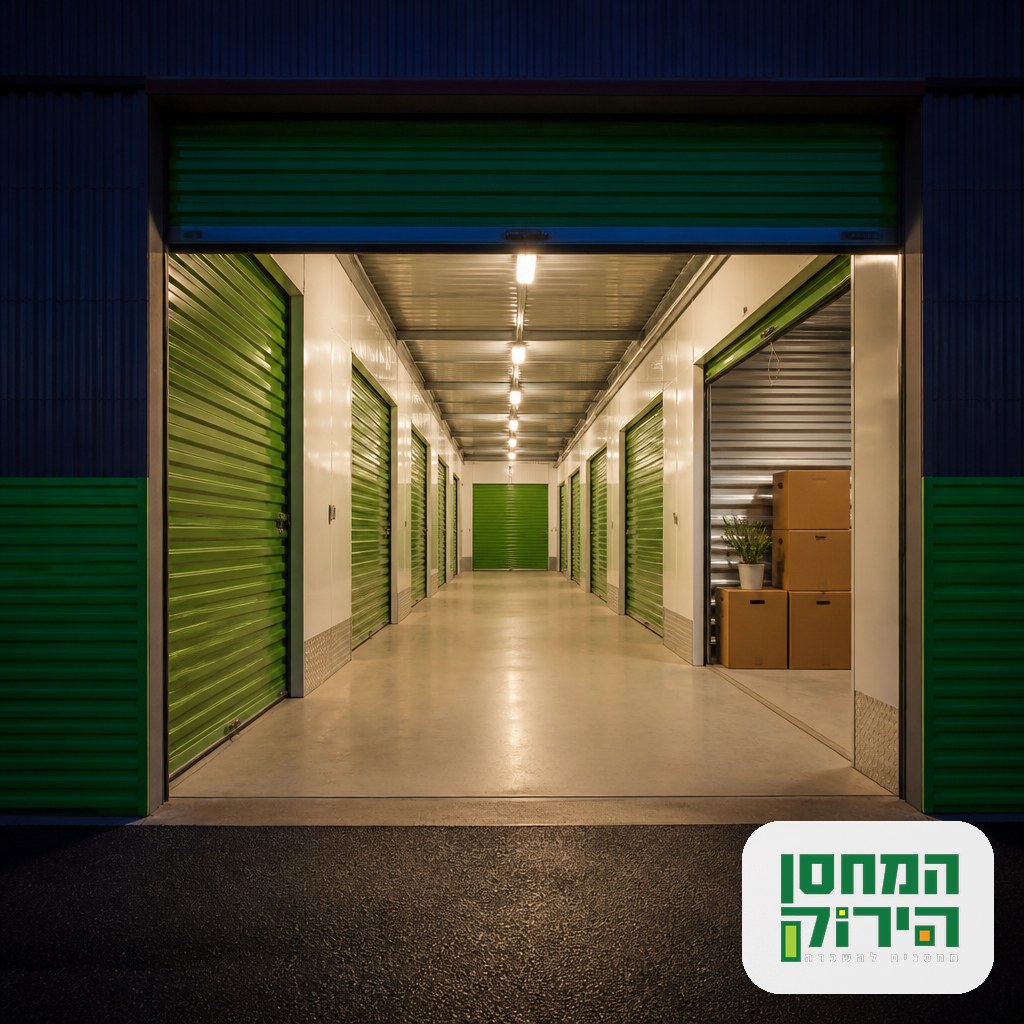
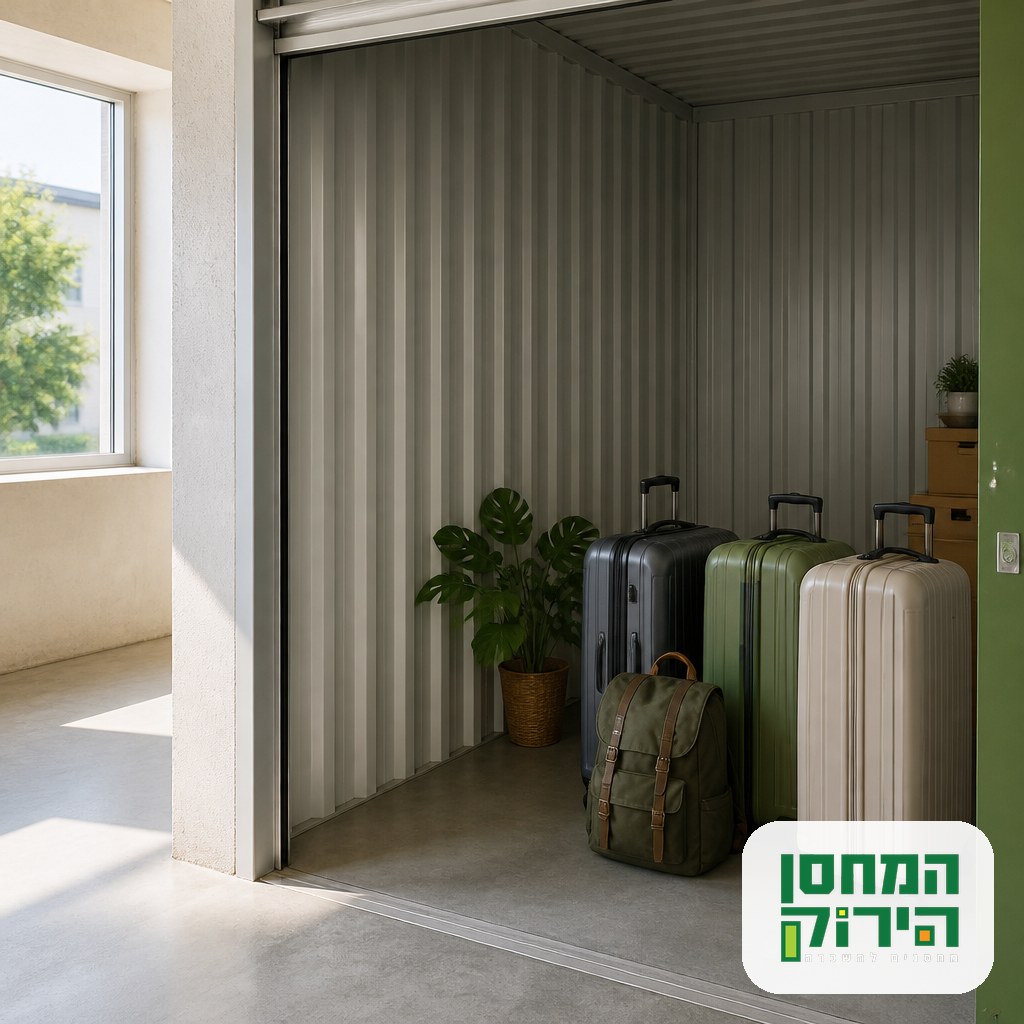
A small storage unit is the size most people in Israel actually need, and the one they are least likely to ask about. Olim waiting for an apartment, foreign residents who keep a base here between postings, students between semesters and families who ran out of cupboards all tend to picture a garage sized room, book larger than they need, and pay for air. The locker size unit, usually called EXTRA SMALL on an Israeli price list, is a different product: built for boxes, suitcases, documents and seasonal gear, not for a flat full of furniture. Here is what genuinely fits in one, who it suits, when sizing up is the honest answer, and what to check before you sign.

What a small storage unit in Israel actually holds
The hardest part of renting storage for the first time is translating a floor plan into real belongings. Square metres on a price list mean little until you picture your own boxes inside them, and most people are out by a full size one way or the other.
The smallest units are also not all identical. At the Sharon branch in Kibbutz Yakum an EXTRA SMALL unit measures roughly 1.2 by 1 metre and about 1.25 metres high, around 1.5 cubic metres. At Kiryat Anavim near Jerusalem the smallest unit is shaped differently, roughly 0.9 by 2.2 metres and about 1.5 metres high, closer to 3 cubic metres. Same category, different footprint, so the branch matters as much as the label.
The locker size unit, measured
Think of the smaller as a generous wardrobe laid on its side, the larger as a deep cupboard you can reach into but not walk into. Neither is a room you stand inside, which is the most useful thing to know before you book: you load from the doorway, so whatever goes at the back should be something you will not want for months.
What fits in practice
Working from real move ins, a locker size unit takes roughly the following, in one combination or another:
- Eight to fifteen standard moving boxes, depending on the unit and how evenly you stack.
- Two or three large suitcases, often the entire luggage of a family that has just landed.
- Seasonal items that live in storage most of the year: winter bedding, coats in breathable covers, a sukkah frame, camping gear.
- Documents, files and photo albums in sealed plastic crates rather than cardboard boxes.
- Sports equipment such as a bicycle, skis or a surfboard standing upright along the long wall.
- Flat packed furniture, for example a disassembled desk or a bed frame without the mattress.
What does not fit matters just as much: a sofa, a fridge, a washing machine, a mattress, a dining table or a wardrobe still in one piece. Any one of those swallows a locker size unit.
The two mistakes people make when estimating
The first is measuring the pile as it sits in the flat, spread across a hallway and half a bedroom. Belongings take up a fraction of that once they are in uniform boxes and stacked square. The second is the opposite: assuming a small unit will swallow whatever you bring, then arriving with a mattress and finding it fills the whole thing.
The one hour test that settles it
Before you book, pack what you intend to store into boxes of the same size and stack them against one wall in a single block, heaviest at the bottom. Measure that block and add a quarter for the things you will find later, because you always find more. Under about one and a half cubic metres and a locker size unit will do. Nearer three, look at the Kiryat Anavim shape or the next model up. An hour of stacking beats any online calculator.

Who a small unit suits, and who should size up
Storage size is a question about your situation rather than your possessions: the same boxes can be the right or wrong choice depending on how long they are staying and how often you need to reach them.
Situations where a small unit is the right call
- New olim whose shipment is already in the apartment, but with overflow the flat cannot take in the first year.
- Foreign residents and diplomats keeping documents, art and a few valuables in Israel between postings, who want a locked unit rather than a friend’s spare room.
- Students between semesters or before a long trip, whose belongings fit into boxes and a suitcase.
- Families in a small Tel Aviv or Jerusalem flat who need the seasonal half of their belongings out of the house year round.
- People mid renovation who have moved the furniture elsewhere and only need a safe place for boxes, files and anything fragile.
- Anyone subletting a furnished flat who wants personal items and paperwork out of a tenant’s reach.
If you recognise yourself in that list, you can start small and move up later. Units are rented per month on a commitment track, so this is a decision you can revisit rather than a bet on the next three years. The full range of sizes, and what each is meant to hold, is set out on the private storage units available across Israel page.
When the next size up is the honest answer
Storing the contents of an apartment is not a small unit job, even a studio. The moment real furniture is involved, a bed, a sofa, a fridge or a wardrobe, you need a unit you can walk into and arrange, with an aisle down the middle. Forcing a flat into a locker size unit ends in damage, because things get wedged and loaded on top of each other instead of stacked. The same applies if you expect to visit often: a unit loaded solid from the doorway means unloading half of it to reach one box. If you need regular access, pay for the aisle.
How to pack a small unit so it holds more
In a locker size unit, packing technique is the difference between one size and the next. The goal is to fill the height, keep the shapes uniform and leave nothing loose.
Using the height properly
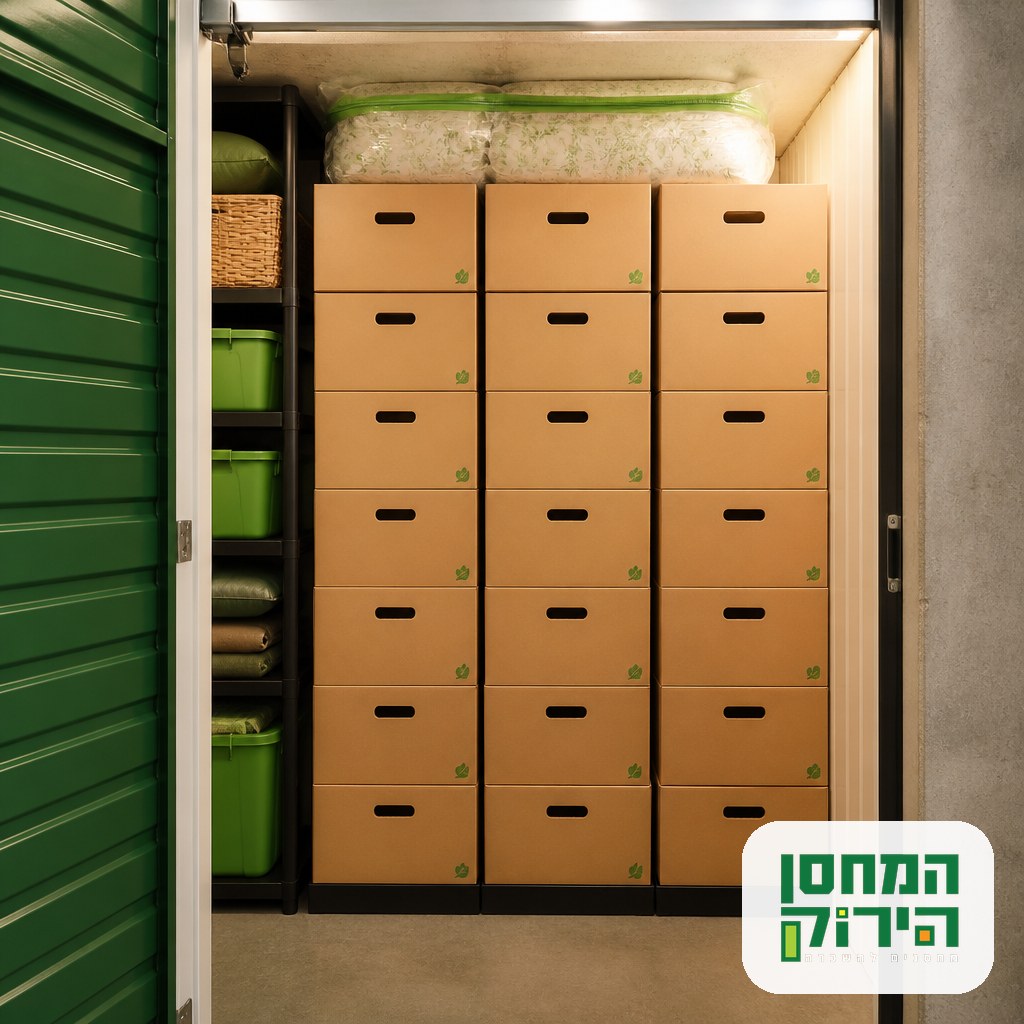
- Use boxes of one or two sizes only. Mixed boxes leave gaps no effort recovers.
- Heavy boxes at the bottom and light ones on top, with books and files split across several small boxes rather than one nobody can lift.
- Vacuum bags for bedding and winter clothes, which cuts their volume substantially and keeps dust off.
- A narrow shelf unit along one wall, so you stack on shelves instead of crushing the box underneath.
- Bicycles, boards and frames standing upright against the long wall, where they use almost no floor.
- A written list of box numbers on your phone, because in a unit loaded from the doorway memory alone finds nothing.
Two things to avoid: sealed plastic bags for textiles, which trap moisture against the fabric, and cardboard placed straight on the floor. Keep boxes on a pallet, a shelf or a thin board, and leave a finger of air between the stack and the walls.
What to check before you sign
The small units go first at every branch, so ask the practical questions in the first phone call rather than the second.
Branch, access and opening hours
Access hours matter more in a small unit than a large one, because small units are the ones people visit most. Each branch works differently. The Sharon branch at Kibbutz Yakum is open seven days a week from 06:00 to 22:00, with your own key, parking next to the units and no appointment needed. Kiryat Anavim near Jerusalem is open Sunday to Thursday during office hours. In Tel Aviv, the Kibbutz Galuyot branch offers 24 hour access, which suits anyone whose schedule does not fit a working day, while Florentin runs on set opening hours. Compare the four branches and their opening hours against your own week, and if you are between Netanya and Ramat HaSharon, start with the storage units at the Sharon branch.
Security, insurance and what you cannot store
A unit is private and closed with your own lock, inside a closed building, with indoor units raised off the floor. Across the branches there are closed-circuit cameras and alarm systems connected 24/7 to a security and patrol dispatch centre. Insurance is separate and is not part of the monthly storage fee: comprehensive contents cover, including earthquake damage, is available as an add on based on the value you declare. The rules on what may not go in apply to the smallest unit exactly as to the largest: no fresh or perishable food, no flammable or hazardous materials, no gas or fuel, no plants and no animals.
In summary: start with the size your boxes need
A small storage unit solves one problem well. It takes boxes, suitcases, documents and the seasonal half of a household out of a flat with no room for them, at a monthly cost well below the next size up, which makes it the natural first unit for olim, foreign residents and students. It is not an apartment contents solution, and not the right choice if you need your things weekly. Stack what you plan to store, measure the block, add a quarter, and match that to a model. The storage unit price list by size sets out every model and what it holds, and our team is happy to walk the sizes with you before you commit.
Frequently Asked Questions about small storage units
How many boxes fit in the smallest storage unit?
Between eight and fifteen standard moving boxes, depending on the branch and how evenly you stack. The smallest unit in the Sharon is around 1.5 cubic metres, while the smallest at Kiryat Anavim is closer to 3, so the same label can mean roughly double the capacity. Stack square and fill the height and the upper end is realistic.
Can I store a mattress or a sofa in a small unit?
Not in a locker size unit. A double mattress or a two seat sofa fills it on its own, and forcing either in means everything else gets loaded on top. If furniture is part of what you are storing, start from a unit you can step into and arrange.
Is a small unit enough for a studio apartment?
Usually not. A studio still has a bed, a fridge, a table and a wardrobe, and those four alone need a unit several times the size. A small unit is right for the boxes, clothes and documents from a studio, with the furniture staying in the flat, going to a larger unit or being sold before the move.
Is my property insured while it is in storage?
Insurance is purchased separately and is not part of the monthly fee. You can take comprehensive contents cover on the full value you declare, including earthquake cover, at ₪1.8 per ₪1,000 of declared value. For a small unit holding documents, electronics or jewellery it is usually worth declaring the real replacement value rather than a round guess.
Can I move to a bigger unit later if I run out of room?
Yes, and it is a common pattern. People arriving in Israel often start small and move up once they know what they are keeping, or move down once the apartment is furnished. Ask about availability in the size above yours at the branch you choose, since that is what makes the switch simple.
Which branch should I choose for a small unit?
Choose by journey time rather than map distance: a unit you reach in fifteen minutes gets used, one an hour away does not. Kibbutz Yakum serves Netanya, Herzliya, Raanana, Kfar Saba and the Sharon, Kiryat Anavim serves Jerusalem and the towns around it, and in Tel Aviv, Florentin suits the south of the city while Kibbutz Galuyot suits anyone coming outside normal hours.