If you have searched for luggage storage in Tel Aviv or Jerusalem, you are probably in one of two very different situations, and they have two very different answers. Either you have a handful of hours to kill between checkout and a late flight, or you are leaving the country for a season and do not want to drag four suitcases and a box of books across the world and back. The first case calls for left luggage, measured in hours. The second calls for a small storage unit, measured in months. This guide explains which one fits your trip, what to check before you hand over your bags, and why the answer in Israel is a little different from the answer in Europe.

What people really mean when they search for luggage storage
The phrase covers everything from a backpack parked for four hours to a full household of suitcases parked for two years. Pricing, location and security all work differently at the two ends of that range, so it is worth being honest with yourself about which one you need before you start comparing options.
A useful test: are you coming back for the bags today, or in a different season? If it is today, convenience beats everything and you want something walkable and hourly. If it is months away, what matters instead is a private lockable space, a sensible monthly rate and a place you trust to leave alone.
Left luggage for a few hours
For a same-day gap, start with the people who already know you. Hotels and hostels will usually hold bags for guests on the day of checkout, and that is almost always the simplest and cheapest answer. Short-stay apartment hosts are often willing too if you ask in advance. Paid hour-by-hour bag services also operate around busy tourist areas in central Tel Aviv and Jerusalem, and they are built for exactly this: a few hours, a small fee, a receipt and a quick pick-up on the way to the airport. A self-storage unit is not the right tool for that job, and we will say so plainly rather than sell you one.
Storage for a few weeks, months or longer
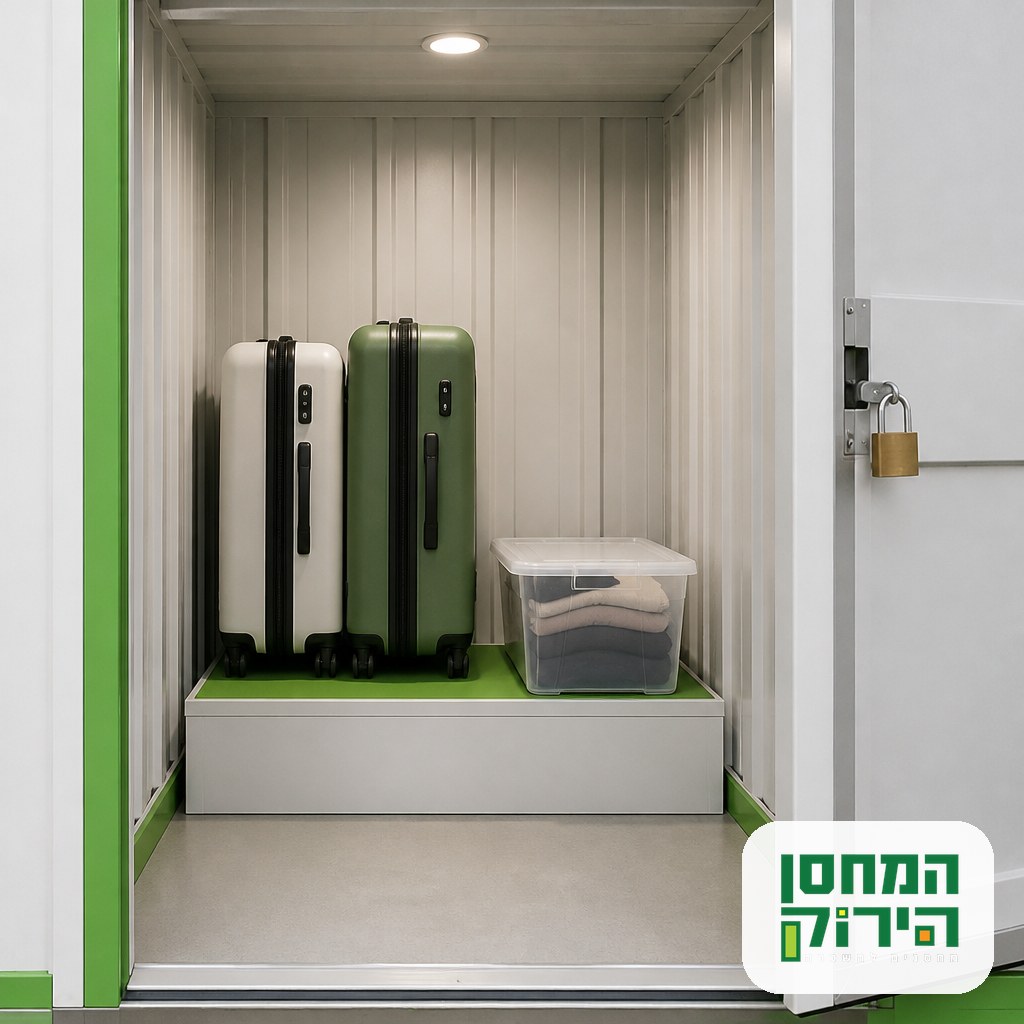
The moment the question becomes weeks rather than hours, the maths flips. Hourly bag storage becomes expensive very quickly, hotels will not hold luggage once you have checked out for good, and leaving boxes with a friend tends to strain the friendship. A small private storage unit solves it: you load it once, lock it with your own padlock, and come back when you are back in the country.
Who needs a storage unit rather than left luggage
Over the years the same handful of travellers keep arriving with the same problem, and none of them are tourists with a four-hour gap. These are the people for whom a unit is genuinely the better answer:
- Long-stay visitors who fly home for the summer and return in the autumn.
- Volunteers and programme participants between placements, with a semester of gear and nowhere to put it.
- Students who clear a shared flat for the summer and want it back in October, not shipped twice.
- Olim and foreign residents who keep a base in Israel but spend part of the year abroad.
- Anyone between apartments: a lease ended, the next one starts in six weeks, and the bags cannot sit in a lobby.
- Business travellers with trade show material, samples or kit that should stay in the country between visits.
Long-stay visitors, volunteers and students
If you are in Israel on a programme, a visa or a long project, your luggage problem is seasonal rather than daily. The pattern that works is simple: keep what you genuinely use in the flat, put the rest in a unit sized for suitcases and boxes rather than furniture, and treat the unit as the place your winter clothes, books and kitchen gear live while you are away.
People between apartments
Rental gaps in Tel Aviv and Jerusalem rarely line up neatly. If you have a few weeks between a lease that ended and one that has not started, a unit buys you the ability to move out calmly, store the bags and boxes, and move in without carrying everything through a friend’s living room in between. For a stay in the centre of the city it is worth comparing a short booking at storage units for rent in Tel Aviv against the cost of extra hotel nights with the bags in the room.
What to check before you leave bags in storage in Israel
Four things decide whether storing luggage here feels easy or annoying, and only one of them is the monthly rate.
Access hours and where the branch actually is
This is where Israel differs from most European cities. Storage sites are not usually in the middle of the tourist districts, so check both the location and the hours before you book.
Tel Aviv: two branches with different hours
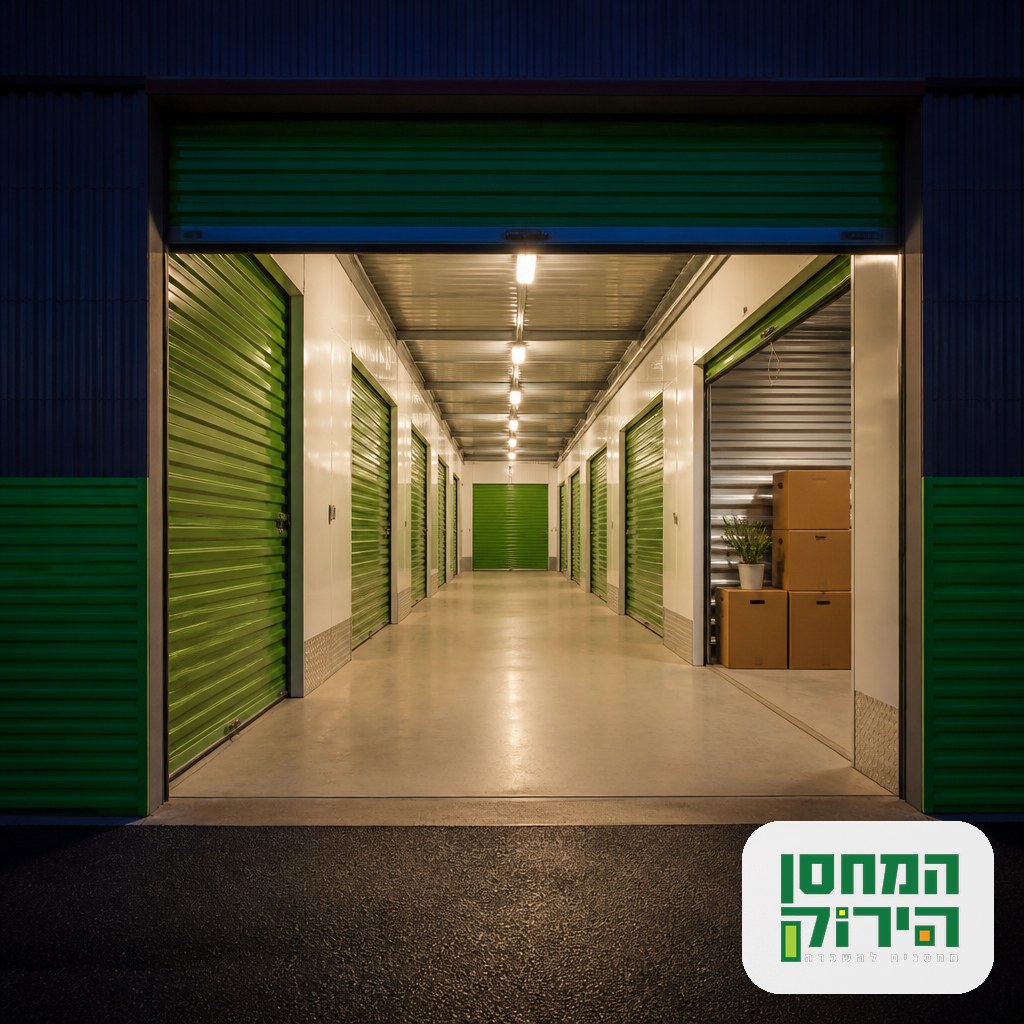
In Tel Aviv there are two options with genuinely different characters. The Florentin branch at 50 Florentin Street sits in the south of the city and opens Sunday to Thursday from 09:00 to 19:00 and Friday from 09:00 to 13:00, closed on Saturday. The branch at 34 Kibbutz Galuyot Road is the one that matters for awkward travel times, because the Kibbutz Galuyot branch has 24/7 access to your unit. If you fly at dawn or land at midnight, that is the one to look at.
Plan the drop-off around the flight, not the other way round
Work backwards from your departure. Decide when the bags need to be gone, then pick a branch whose access hours cover that moment, then book. Travellers who do it in the other order end up standing outside a closed building with a taxi meter running, which is a bad way to start a holiday.
One trip with the bags beats three
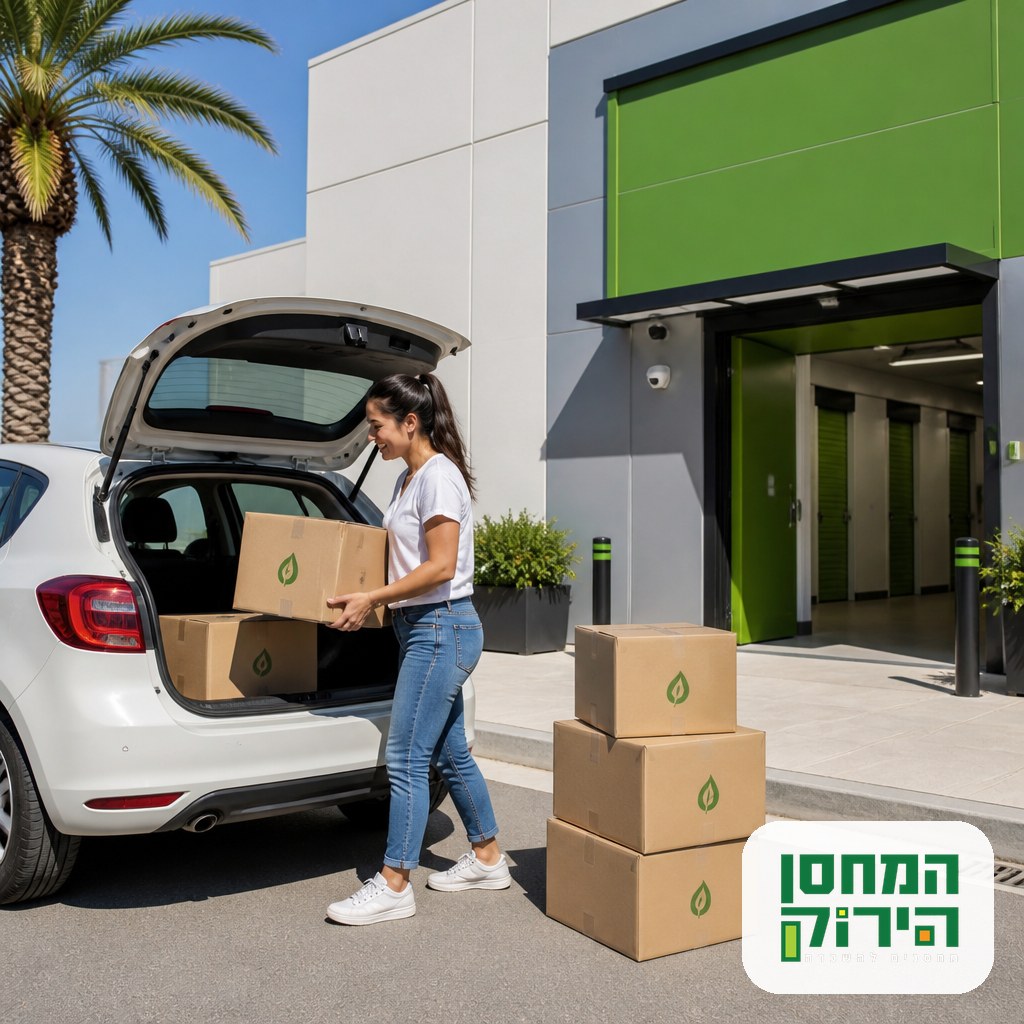
Whatever you do, aim to handle the luggage once. Pack it so that everything going into storage is in the car on a single trip, drop it, lock up and leave. Every extra journey across the city with a suitcase costs more in time and taxi fares than any difference in the monthly rate.
Jerusalem: the branch is just outside the city
For the Jerusalem area the storage is at Kiryat Anavim, in the old cowshed at Kibbutz Kiryat Anavim beside the Route 1 interchange, roughly 16 minutes from the centre of Jerusalem without traffic and about 11 from Beit HaKerem. It opens Sunday to Thursday from 09:00 to 17:00 and is closed on Friday and Saturday. That means a short drive or taxi rather than a walk, which is fine for a seasonal drop-off and wrong for a four-hour gap. If your base is in the city, compare the drive against storage space for rent in Jerusalem and decide which fits the trip.
The size you actually need
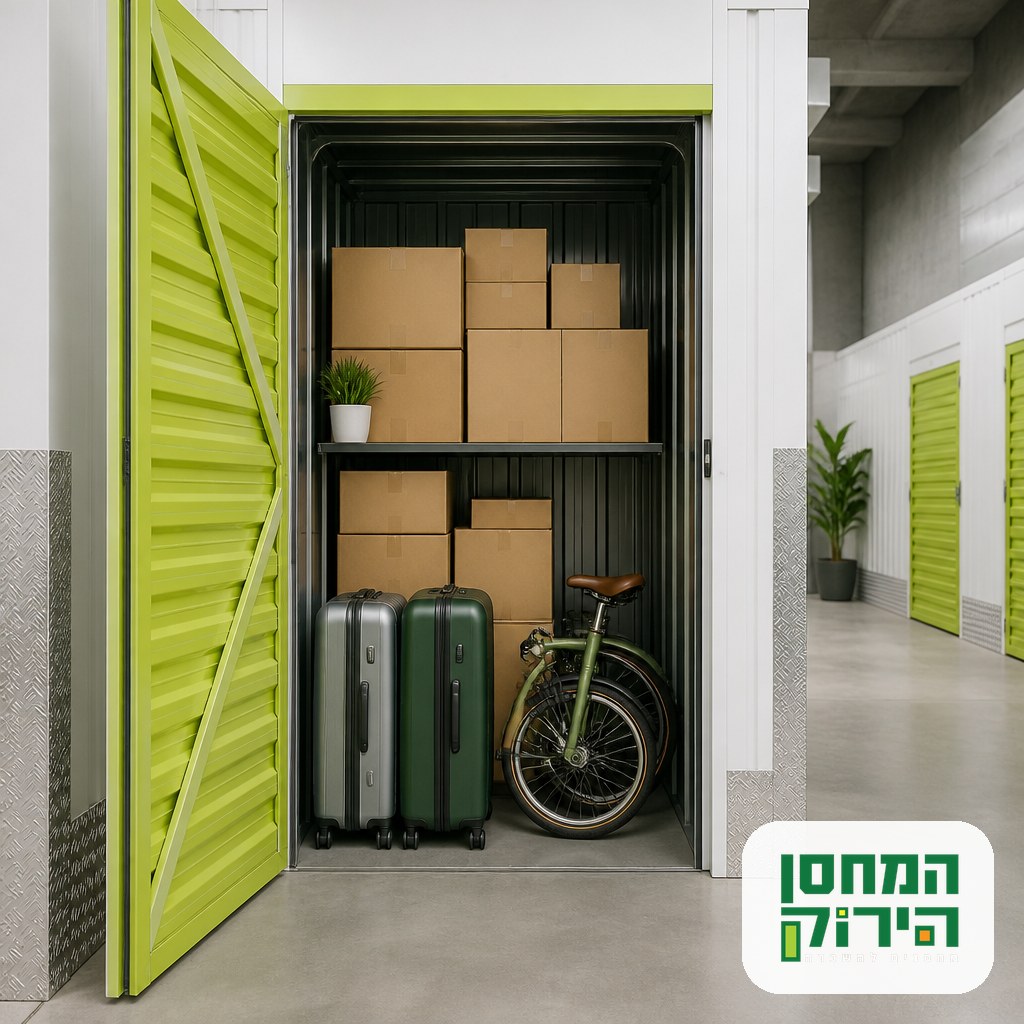
Luggage takes less space than people expect. A handful of large suitcases, a few sealed boxes and a bicycle fit comfortably in the smallest sizes. Stand the cases upright rather than flat, keep a narrow path to the back, and you will fit noticeably more into the same floor area. The current sizes and starting points for each model are set out on the storage price list, which is the honest way to compare rather than guessing.
Security, packing and insurance
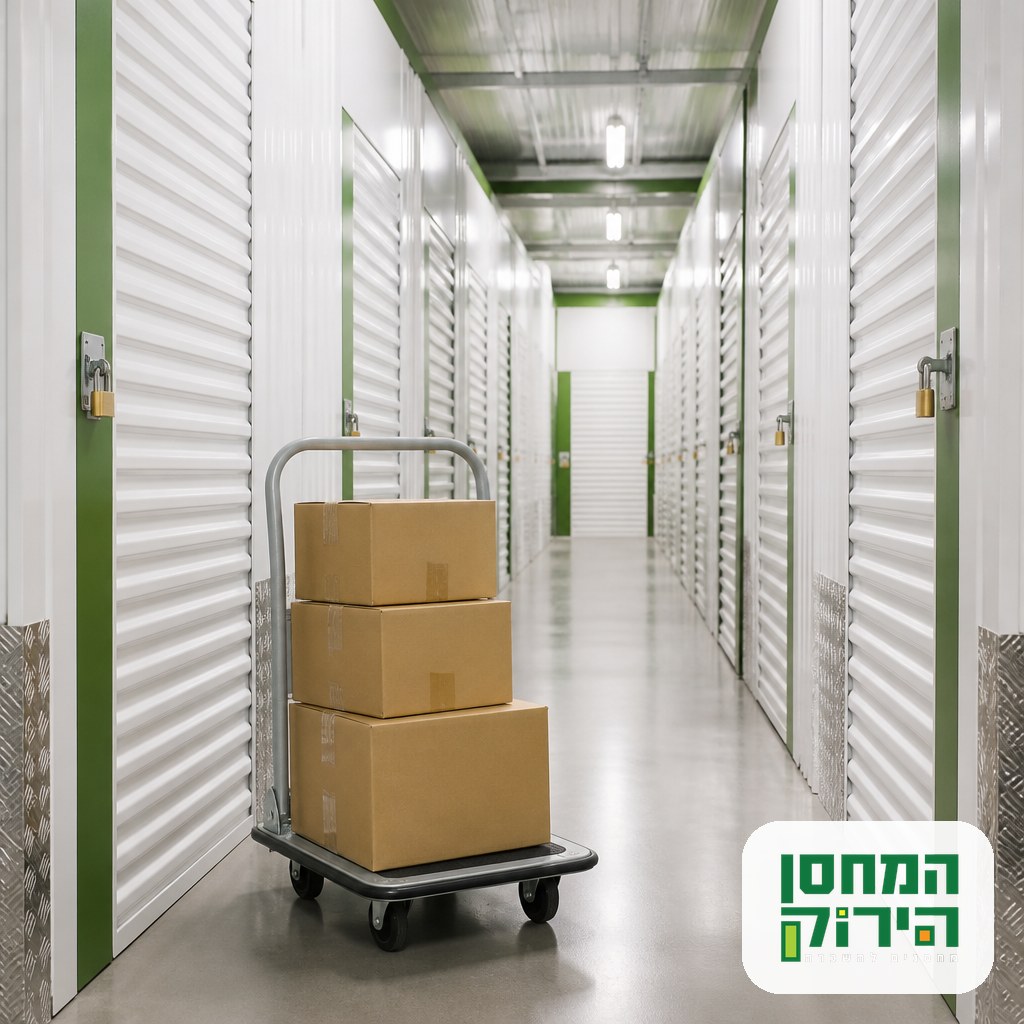
Across the branches you get a private unit closed with your own padlock inside a closed building, with closed-circuit cameras, alarm systems and advanced means connected 24/7 to a security and patrol dispatch centre. Units are indoors and raised off the floor. Contents insurance is bought separately as an add-on on the full declared value, with cover that is comprehensive and includes earthquakes, so it is worth deciding what your things are genuinely worth before you sign. Note also what may never go into a unit: fresh or perishable food, flammable and hazardous materials, gas, fuel, plants and animals.

How to pack luggage that is going into storage for months
Bags that sit for a season need slightly different packing from bags that fly tomorrow. A few minutes of preparation prevents the two classic disappointments, a musty smell and a flat tyre on a wheeled case.
- Empty every bag of food, liquids and anything that can leak, including half-used toiletries.
- Wash and dry clothes fully before packing them, because damp fabric is what creates smells and mildew.
- Pack clothing and linen in sealed plastic boxes rather than leaving them loose in a soft bag.
- Stand hard cases upright and avoid stacking heavy items on top of soft luggage.
- Keep documents, electronics and anything irreplaceable with you rather than in storage.
- Photograph the contents of each bag before you close it, so you know what is where from your phone.
In summary: match the storage to the length of the trip
For a few hours between checkout and a flight, ask your hotel or use an hourly bag service in the city centre, and keep your money. For a few weeks, months or a year, a private storage unit is cheaper, safer and far less stressful than hauling everything home and back. Check the access hours before you book, size down rather than up, and insure the contents for what they are really worth. If you are planning a long trip in or out of the country, get in touch with Green Storage and we will help you match the unit to the stay, whether that means 24/7 access at the Kibbutz Galuyot branch in Tel Aviv or a seasonal spot near Jerusalem.
Frequently Asked Questions
Can I store suitcases for just one day?
A storage unit is rented by the month, so for a single day it is the wrong tool. Ask your hotel or hostel to hold the bags on checkout day, or use an hourly bag service in the city centre. Come back to a unit when the question becomes weeks or months rather than hours.
Is there luggage storage inside central Tel Aviv?
Our Tel Aviv branches are in the south of the city, at 50 Florentin Street and at 34 Kibbutz Galuyot Road, both a short ride from the centre rather than a walk from the beach. The Kibbutz Galuyot branch is the one with access to your unit at any hour, which is what usually matters for early flights.
What about storage in Jerusalem itself?
The storage for the Jerusalem area is at Kiryat Anavim, beside the Route 1 interchange, about 16 minutes from the centre of Jerusalem without traffic. There is no unit inside the city itself, so plan a short drive or taxi for the drop-off and the pick-up, and check the opening hours, Sunday to Thursday from 09:00 to 17:00.
Are my bags insured while they are stored?
Insurance is bought separately as an add-on, priced at 1.8 NIS for every 1,000 NIS of declared value, and the cover is comprehensive and includes earthquakes. Think about what the contents are genuinely worth, declare that amount, and keep passports, documents and valuables with you rather than in the unit.
How small a unit do I need for suitcases and boxes?
Most travellers storing luggage and a few boxes need one of the smallest models rather than anything furniture sized. Stand the cases upright, use sealed boxes for soft items, and leave a narrow path to the back wall. The sizes for each model are published on the price list so you can measure your own pile before you decide.
Can I leave a bicycle or sports gear with the bags?
Yes, bicycles, surfboards and camping gear store well alongside luggage. Clean and dry the gear first, let the air out of nothing but inflatable items, and keep anything with fuel in it, such as a camping stove canister, out of the unit entirely.