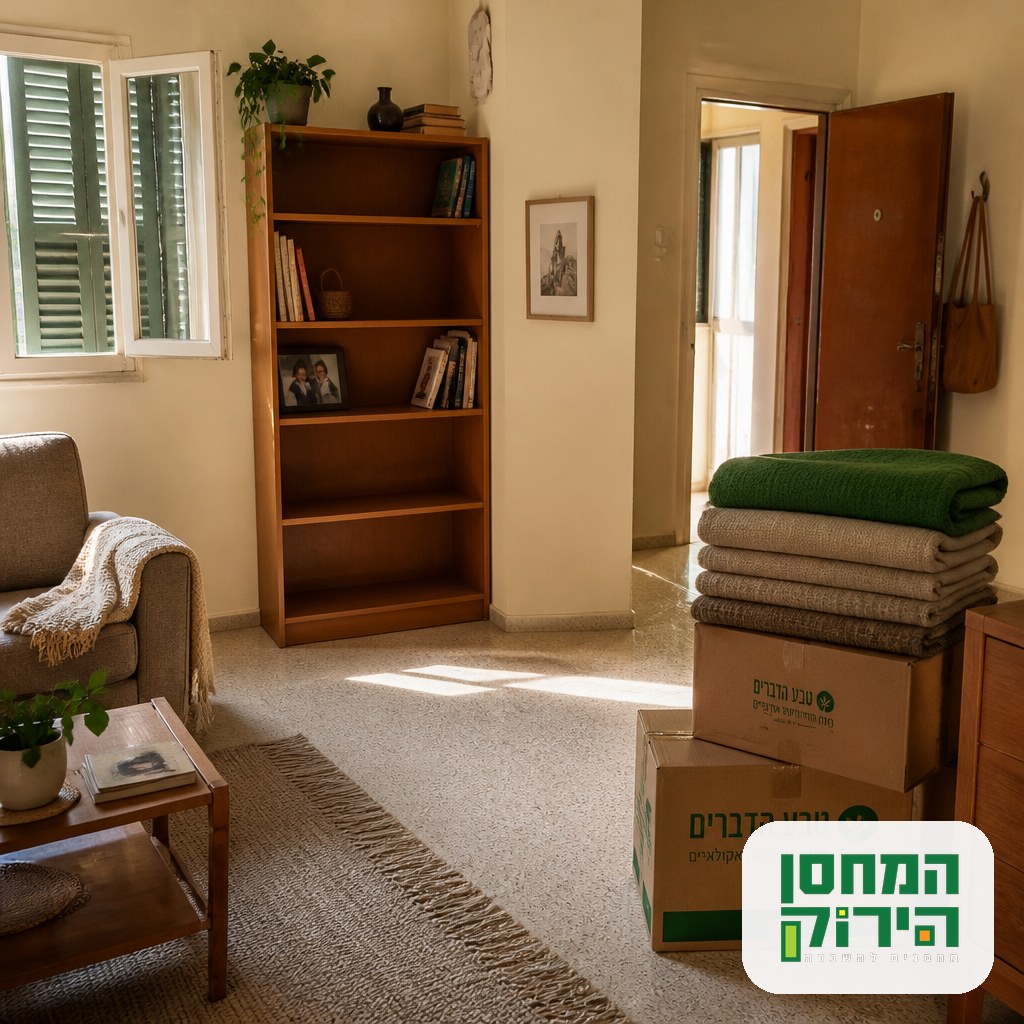
Storage after a death is one of those arrangements nobody looks up until the week it is needed. A parent has passed away in Israel, you live in New York, London, Paris or Toronto, and the apartment they lived in for thirty years is full of a lifetime of belongings. You have a flight home, a sibling in another time zone, and a landlord or a buyer who needs the keys. Almost nothing about the contents has to be decided this month, but the apartment itself usually cannot wait. This guide explains how families clear an apartment in Israel from abroad, what to move into a storage unit and what to leave for later, so that the decisions get made calmly rather than on the last afternoon before a flight.

Clearing a home is difficult anywhere. Doing it on a visitor’s schedule, in a country where you may not live, adds three problems families rarely see coming. The first is time on the ground: most people who fly in have one or two weeks, much of which belongs to the funeral, the shiva and the relatives who come to visit.
The second problem is that the apartment and the belongings run on different clocks. The apartment has a hard date attached to it: a lease that ends, a sale already in motion, or a family that cannot carry the costs of an empty flat. The belongings have no date at all. Deciding which grandchild should have the dining table is not something to settle alone at midnight because a van is booked for the morning.
The third problem is distance between the people deciding. Siblings scattered across countries cannot stand in the same room and point at things, so without a shared record of what exists, every conversation starts from memory, and memory is where the disagreements live.
It helps to name them, because each one has a different deadline and only one of them is truly urgent.
A rented unit is simply a way of unhooking the first clock from the other two. The apartment is emptied and handed back on time, and the contents move somewhere safe where they can wait for the other two clocks to finish running.
Once the decision is made to clear the flat, the instinct is to sort everything into keep, give away and discard before anything moves, and that is the step that stalls families for months. A better order is to make only the decisions you are certain about now and move the rest intact. Looking at the range of private storage units in Israel early helps, because once you know what a unit holds, the question changes from what do we get rid of into what fits.
The practical trick is to split the contents into three groups rather than the usual two, and to let the third group be large without guilt.
Documents, photographs, jewellery and anything with an obvious owner or clear sentimental weight to one named person. These travel with someone or go to a family member’s home now, not into storage, and they belong in one clearly marked box that is never packed in with general household goods.
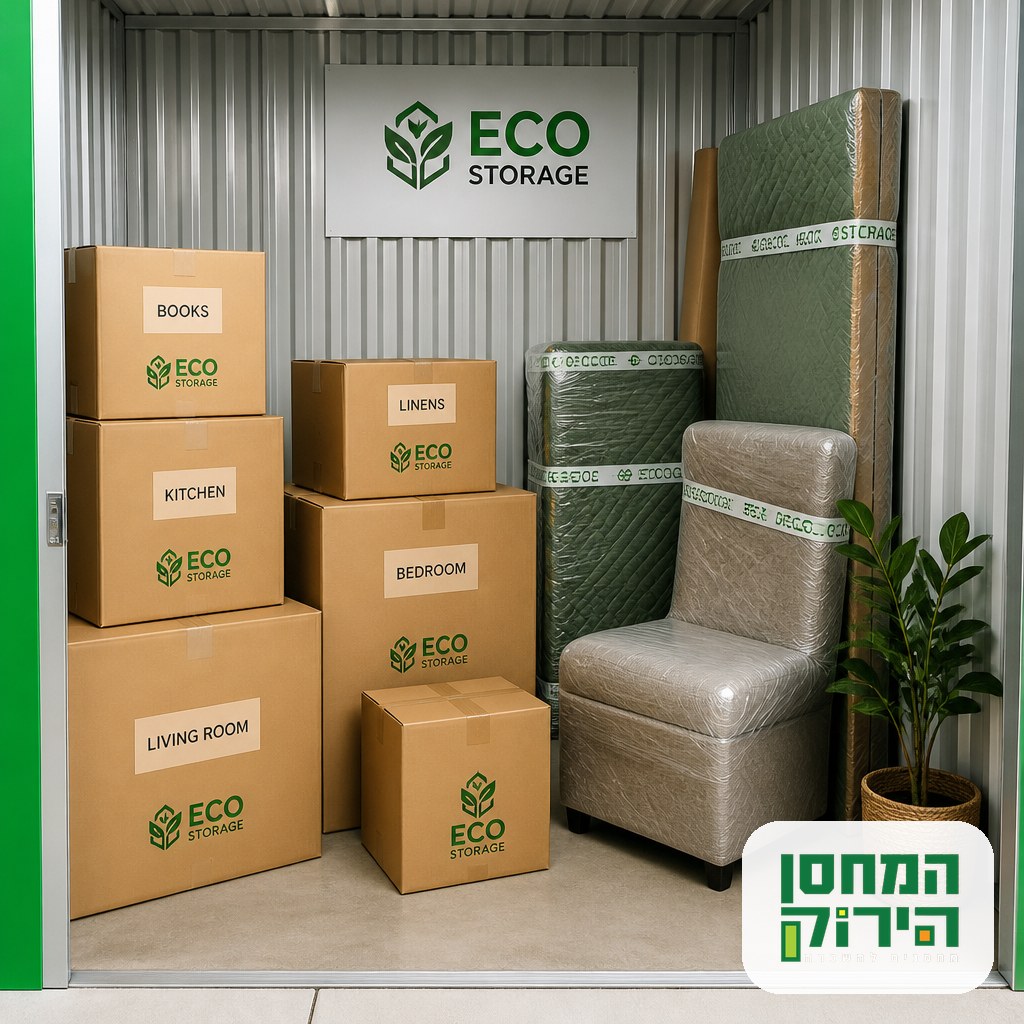
Furniture, kitchenware, books, linens, tools, artwork of uncertain value and the contents of the bottom of every wardrobe. This is usually most of an apartment, and it is exactly what a unit is for. None of it needs a decision in the week you are in the country.
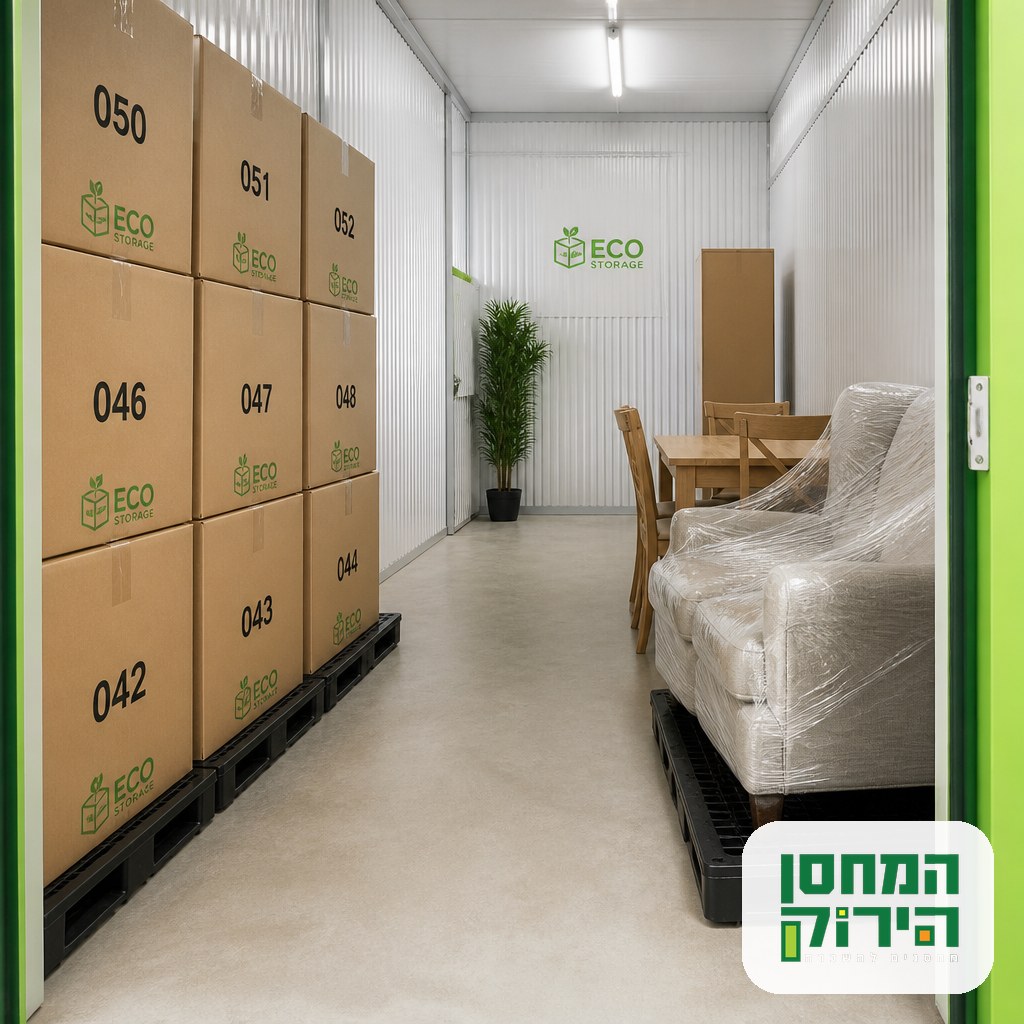
Before a box is sealed, photograph what is inside and write the same number on the box and on the photograph. It takes seconds per carton and changes every conversation that follows, because a sibling abroad can look at the contents of box 14 instead of trying to remember what was in the sideboard. Families who do this finish the sorting in a handful of video calls.
A shared spreadsheet with a row per box, a short description and a link to the photograph becomes the single version of the truth, where a group chat scrolls and the message with the important detail is always the one nobody can find. It also makes the eventual division straightforward: people claim box numbers rather than vague descriptions, and whatever is unclaimed after a few months is easy to donate or sell without anyone feeling overruled.
The requirements here are not those of an ordinary move. You are arranging something you will not visit often, possibly from another country, and the person who opens the unit next may be a sibling rather than you.
A few points are worth settling before you book anything.
If most of the family lives outside Israel, it is worth reading how self storage works for foreign residents before you sign anything, because the questions about contracts, payment and who may access a unit come up in exactly this situation.
Two practical matters tend to be left until last and are much easier to handle while you are still in the country.
Most families have one visit to work with. This order fits into a few working days and leaves the hard conversations for later, which is where they belong.
Clearing a parent’s home from another country is never only a logistics problem, but the logistics are the part that can be solved cleanly. Empty the apartment on the date it has to be empty, move the undecided belongings into one locked unit, number the boxes and photograph them, and the family gets the thing it actually needs, which is time to decide together rather than separately and in a hurry. If you are working out what size you need or what it would cost per month, contact Green Storage or look through the storage unit price list and we will match a unit to the contents and to the time the family needs.
A unit can usually be arranged within a short time of contacting us, which is why families often book one in the same week they clear the apartment. Call before the move day so the size is confirmed and the paperwork is ready when the van arrives.
There are three commitment tracks: no commitment, six months to a year, and over a year. Families clearing a parent’s home most often start on a flexible track, because nobody knows in the first month how long the decisions will take. The track can be changed later if the arrangement turns out to be longer term.
Insurance is not included in the storage fee. Comprehensive contents cover on the full declared value, including earthquakes, is available as an add-on, at ₪1.8 per ₪1,000 of declared value. For an inherited household it is worth declaring a realistic figure rather than a low estimate.
Yes, provided that is arranged in advance. Name whoever may access the unit when the agreement is signed, and make sure more than one person can reach a key. This single step prevents most of the problems that come up when the family is spread across several countries.
Decide that after the apartment is handed back, not before. Once the contents are in one unit and photographed, it is much easier to agree on what gets donated or sold, and there is no pressure from a landlord or a buyer sitting behind the conversation.

How can we help you today?