Storage insurance is the topic most people only think about after something goes wrong, and that is exactly the mistake worth avoiding. When you store the contents of an apartment, furniture, appliances or business inventory outside your home, those belongings are worth real money, and often carry sentimental value that no payout can replace. In this guide we explain in plain language what storage insurance covers, which risks a good policy includes, what usually stays outside the coverage, how declared value pricing works, and what to check before you sign. At the end you will also find answers to the most common questions, so you can start your storage period with genuine peace of mind.

A quality storage facility is a safe place: it has security, access control, cameras and regular maintenance. Even so, no facility in the world can guarantee absolute protection against every scenario. A fire that breaks out in a neighboring building, an earthquake, unusual storm damage or a rare break-in are events nobody plans for, but when they happen, the difference between being insured and not being insured can amount to tens or even hundreds of thousands of shekels.
There is an important point many renters miss: the legal liability of the storage company is limited. The company is obligated to provide a sound, secure facility, but it is not the insurer of your belongings. If damage occurs through no fault of the company, for example a natural disaster, the loss falls on the owner of the goods. That is why insurance for stored contents is not a luxury but a basic part of planning your storage properly, just like good packing and choosing the right unit size.
A good policy for stored contents is built around the real risks of storage: natural disasters, fire, water and burglary. The coverage applies to the items you declared, up to the declared value you set. Let us go through the main types of coverage one by one, so you know exactly what to look for in any policy you are offered.
Israel may be a sunny country, but natural hazards are a real risk here: fierce winter storms, flash floods, hail and of course earthquakes. A quality policy for stored contents includes natural disaster coverage, so even an extreme weather event will not leave you carrying the damage alone.
Israel sits along the Syrian-African rift, and experts keep repeating that a significant earthquake is a question of when, not if. Precisely for that reason, earthquake coverage is one of the most important clauses in stored contents insurance, and it is exactly the clause cheap policies tend to drop. At Green Storage, for example, the comprehensive contents insurance includes earthquake coverage, so your belongings are protected even in the most extreme scenario.
Do not settle for a verbal promise. Ask to see the coverage terms in writing, make sure earthquakes appear explicitly in the list of covered risks, and check whether there is a deductible and how high it is. Five minutes of reading now saves long arguments on the day after.
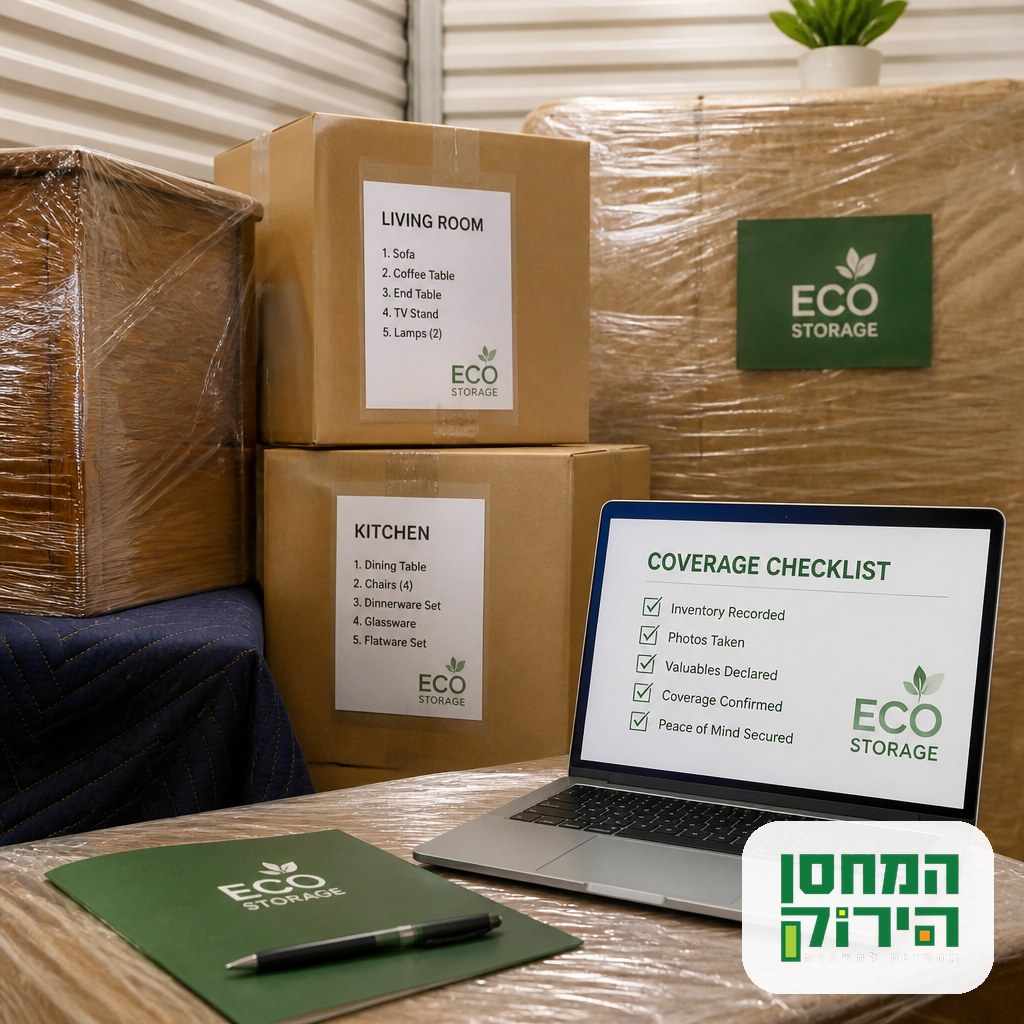
Keep a copy of the policy or insurance certificate, the list of items you declared, and photos of your belongings taken before storage. If you ever file a claim, these three documents are the difference between a quick process and an exhausting correspondence.
Fire is the scenario everyone fears, and even when sprinklers and detectors are installed in the facility, the insurance coverage is the final layer of protection. Alongside the fire itself, a good policy also covers smoke damage and water damage, for example from a burst pipe or flooding, which are actually the more common types of damage in practice.
A professional storage facility with fencing, cameras and access control reduces the risk of burglary to a minimum, but insurance exists precisely for the rare cases. Make sure the policy covers burglary and theft from the unit, and that the coverage is not conditioned on unreasonable requirements. Combining a secure facility with a proper policy gives you double protection.
It is just as important to know what stays outside the coverage, so you do not discover it at the worst possible moment. In most stored contents policies you will find standard exclusions, and these are the most common ones:
The cost of storage insurance is set in a simple, fair way: according to the value you declare for your belongings, not the size of the unit and not the length of the storage period. You decide how much your contents are worth, and the premium is calculated as a small amount for every 1,000 shekels of declared value. That way, someone storing simple student furniture does not pay like someone storing the full contents of a family home with expensive appliances. Each customer pays exactly for the protection they need.
To get the full picture of the storage costs themselves, including unit prices in different sizes, you can review our full storage price list and request a tailored quote. In the interest of transparency: contents insurance is a separate service added to the monthly storage fee, and its exact cost is derived from the value you declare. You will find the exact numbers in the FAQ at the end of this article.
A common question is whether your existing home insurance already covers belongings that were moved to a storage unit. In most cases the answer is no, or only very partially. Standard home policies cover the contents at the insured residential address, and once items leave the home for external storage, the coverage lapses or shrinks significantly. Even when an extension for contents outside the home exists, it is usually capped at a low amount and limited to a short period.
Insurance purchased through the storage company is built exactly for this situation: it covers your belongings where they actually are, for the entire storage period, independent of your home policy. This matters especially during a move or relocation, when everything you own sits in secure self-storage units between homes and there is no insured residential address the contents belong to.
The declared value is the heart of the policy: it determines both the premium and the compensation ceiling. Declaring too little saves a few shekels a month but leaves you exposed, while an inflated declaration simply makes the insurance more expensive. Here is how to do it right, step by step:
This rule matters most in extended storage: contents that sit in a unit for years are exactly the contents whose value people forget. If you are planning long-term storage, set yourself a yearly reminder to refresh the inventory list and the declared value, so the coverage keeps matching reality.
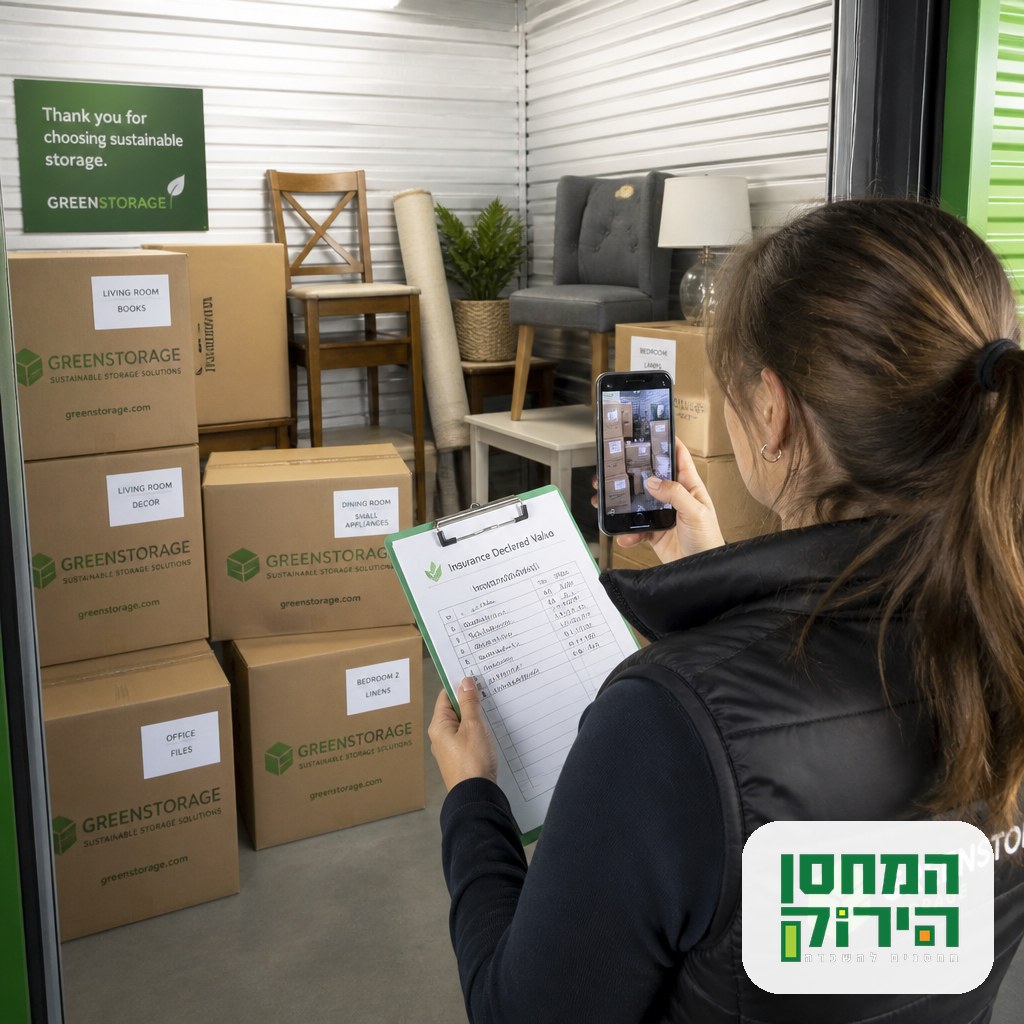
Storage insurance is the natural completion of professional storage: the secured facility protects your belongings day to day, and the policy protects you in the scenarios nobody plans for. Check what is covered and what is excluded, make sure earthquake coverage is included, declare a realistic value and keep organized documentation. At Green Storage you get secure storage units with optional comprehensive contents insurance for the full value you declare, including earthquake coverage. Contact us today for a personal quote that also matches the contents insurance to what you actually store.
The cost is calculated from the value you declare: 1.8 shekels for every 1,000 shekels of declared value. For example, contents declared at 50,000 shekels would cost 90 shekels. You pay exactly for the protection you need, with no surprises.
No. Contents insurance is a separate service added to the storage fee, and its cost is based solely on the declared value. This transparency works in your favor: customers storing modest contents do not subsidize those storing expensive ones.
Yes. The comprehensive contents insurance at Green Storage includes earthquake coverage, alongside fire, natural disasters, water damage and burglary. This is a clause worth verifying in any policy, especially in Israel.
The maximum compensation is capped at the declared value. If you declared 20,000 shekels and contents worth 60,000 shekels were damaged, the payout will not exceed the declared amount. Always declare a realistic value and update it when your contents change.
Yes. Damage does not follow a schedule: fire, flooding or an earthquake can happen during a short storage period too. During a move, when everything you own is concentrated in one place, coverage matters more than ever.
Absolutely. Businesses storing inventory, equipment or archives can declare the value of the goods and insure them the same way. For a business, losing inventory also means losing income, so coverage is even more important than in household storage.

How can we help you today?