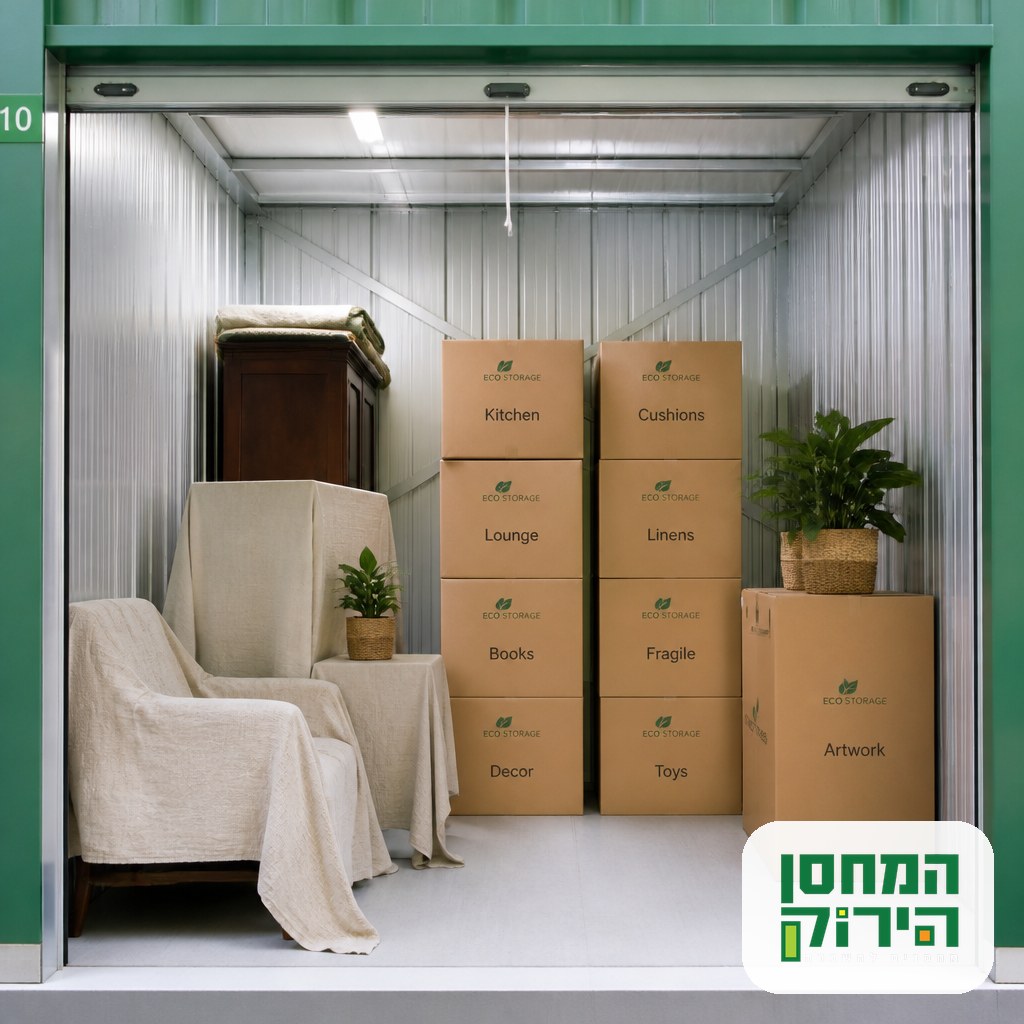
Storage during divorce is rarely the first thing anyone plans for, and it is very often the thing that unblocks everything else. One of you is moving out within weeks, the furniture belongs to both of you, and nobody is ready to decide who keeps the dining table while the rest of the separation is still being worked out. For English speakers in Israel the pressure is sharper: a lease ends on a fixed date, and one partner may be flying out to family abroad. A locked unit that neither of you lives in buys the thing the process is missing, which is time to decide.

An ordinary move has one household and one destination. A separation has two destinations, two budgets and two sets of feelings about the same sofa. The contents of a three room apartment in Tel Aviv do not divide neatly into a rented room in Florentin and a flat near a parent in Raanana.
There is also a timing problem. Property questions, whether they go through a family court, a rabbinical court or a mediator, take months. Apartment questions take weeks. Belongings end up being divided in the week with the least patience and the most emotion, which is how people lose things they later wish they had kept.
A storage unit separates those two clocks. The apartment is emptied on the date the apartment requires, and the contents wait somewhere neutral until the slower decisions are actually made. Nothing is conceded by putting a bed into storage, which is why it works: it is the one step both sides can usually agree to.
The shape of the separation decides how much goes into storage and for how long.
The most common version. One of you stays in the flat with most of the furniture, the other moves into a furnished room or a small rental and can take almost nothing. What travels is personal: clothes, documents, a laptop, a few boxes of books. The problem is the things in between, which belong to the person leaving but have nowhere to go yet. A small unit holds exactly that.
Sort everything into three groups before you book anything. The first is clearly one person’s: inherited items, gifts, tools, professional equipment, clothes. Those leave with their owner. The second is genuinely shared and wanted by both of you, usually the larger furniture and the kitchen, and that group belongs in storage until the agreement is signed. The third is wanted by neither, and the kindest thing is to sell or give it away now rather than pay to keep it.
For any contested item, ask one question: would I buy this again in a year? If both of you answer yes, it goes into the unit and waits for the agreement. If only one of you says yes, that person takes it and it stops being a negotiating chip. If neither says yes, it goes. Running that test item by item usually empties half the list in an evening.
Here the whole household comes out at once and neither of you has a home ready. Two small rentals cannot absorb a full apartment, and the search for the next place rarely finishes on the day the old one closes. The contents go into one unit, each of you takes what you need to live, and the rest is collected in stages over the following months.
Separations in the English speaking community often end with one partner going back to family in the United States, the United Kingdom, Canada or France, sometimes within a month. Shipping a half share of a household abroad before anyone knows whether the move is permanent is an expensive guess. A unit in Israel holds that half share while the decision settles.
The instinct is to borrow space: a parent’s machsan, a brother’s garage, a friend’s balcony. It feels free and it is almost never neutral. Access depends on that person’s goodwill and on their relationship with your former partner, anything damaged becomes a second dispute on top of the first one, and the favour has an expiry date nobody says out loud.
A rented unit removes all of that. It is a defined space with a defined cost, closed with your own lock, and it belongs to neither family. If you are comparing options, it is worth seeing what the different sizes of private storage units in Israel actually hold, because most separating couples need less space than they expect once the personal items have gone with their owners.
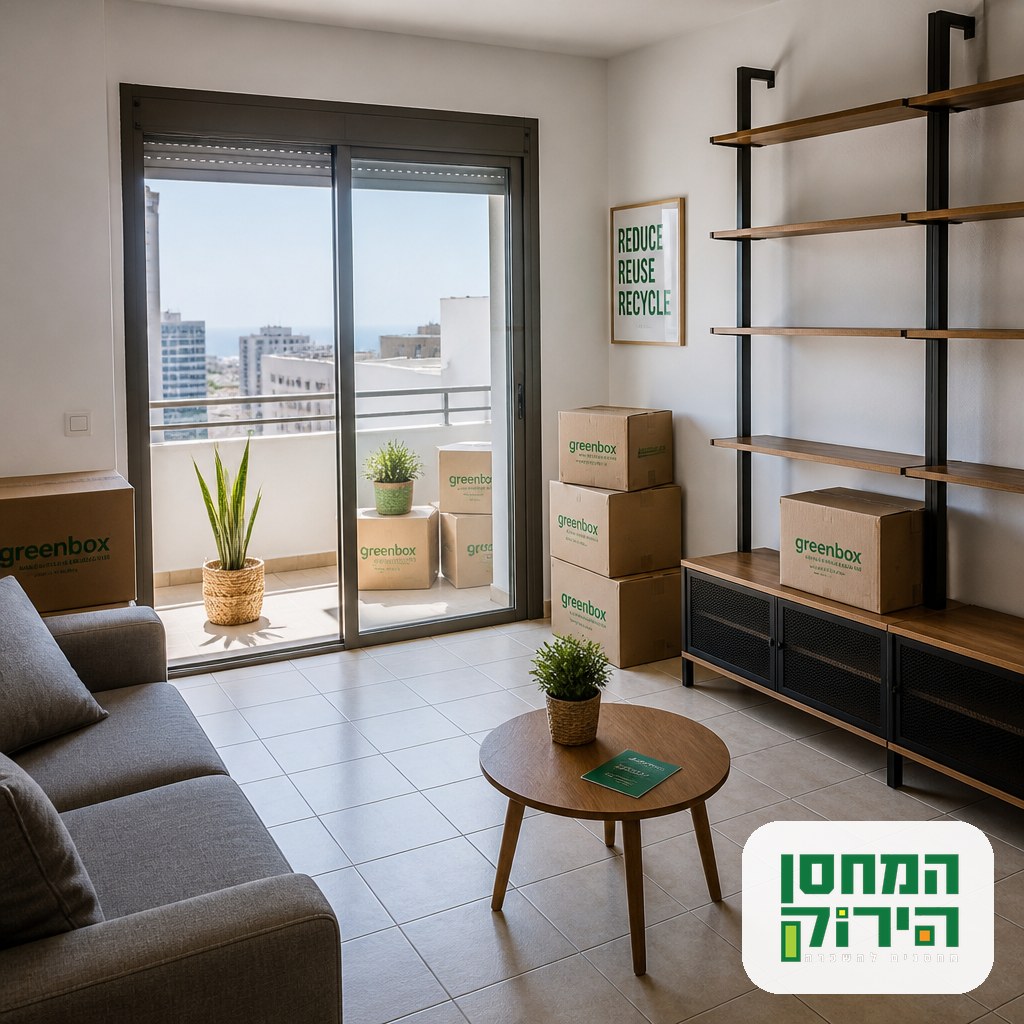
Size is decided by volume, not by the number of rooms you are leaving. In a separation only part of the household usually goes into storage, so the unit is often one or two sizes smaller than a full apartment move. A rough guide:
Walk the apartment room by room and write down only what is actually going into storage, then match that list to a unit size. Taking one size up is better than forcing furniture into a space that is too tight.
When two people own the contents of a unit, how you pack matters more than usual. The goal is a unit that can be opened in six months by either of you and understood immediately.
Cartons, tape and covers are worth buying properly rather than collecting from a supermarket, because these boxes will be opened by someone who was not there when they were packed. Our packing materials and moving boxes cover the standard sizes.
This is the practical question separating couples ask first, and it has a simple answer: the unit is closed with a personal lock, and whoever holds the key can open it. So decide in writing, before anything is moved in, who holds a key, whether either of you may remove items alone, and what happens if one of you is abroad. It is a point to raise with your lawyer or mediator rather than to improvise later.
On the facility side, every branch has closed circuit cameras and alarm systems connected 24/7 to a security and patrol dispatch centre, units sit inside a closed building and are raised off the floor, and access is step free with parking alongside. Opening hours differ between locations, and so does how convenient each one is for two people who now live in different parts of the city, so check the details of each of our branches in Tel Aviv, Jerusalem and the Sharon first.

Storage during a separation is not a way of avoiding the division of property. It is a way of making sure the division happens on the schedule of the people involved rather than that of a landlord or a buyer. Send what is clearly personal with its owner, put what is genuinely shared into one unit with one inventory and a clear agreement about keys, and let the rest go. If you are emptying an apartment in the coming weeks, contact Green Storage to work out which size you need, and look at the tracks on our storage unit price list.
Longer than they first estimate. Emptying the apartment takes days, but property agreements commonly take several months, and a unit taken for six weeks often stays for six. There are three commitment tracks, no commitment, six months to a year, and over a year, so it is sensible to start flexible and move to a longer track if the process runs on.
The rental agreement is signed by the person who takes the unit, and that person is the one the facility deals with. Couples who want shared control usually handle it between themselves: the unit is rented by one of you, and a written agreement between the two of you sets out who holds keys and when items may be removed. Your lawyer or mediator is the right person to fold that into the wider arrangement.
Insurance is not included in the unit price, and it is available as an add on. The cover is comprehensive on the full value you declare, including earthquakes, at ₪1.8 per ₪1,000 of declared value. When the contents are jointly owned and the division is unsettled, declaring a realistic value is worth the small monthly addition.
That is a common situation, and it is handled by arranging access for someone else: a family member, a mover or a lawyer’s clerk who holds the key and comes during opening hours. Let the office know in advance who is arriving on your behalf so the collection is not held up. It is all the more important that the agreement about opening the unit is in writing before anyone travels.
Green Storage has four branches. Tel Aviv has two: Florentin, open during business hours, and Kibbutz Galuyot, which has 24/7 access. In the Jerusalem area the branch is Kiryat Anavim, at the Route 1 interchange, which also serves Beit Shemesh, Modiin and Mevaseret. In the Sharon the branch is Kibbutz Yakum, in the business park.
Fresh or perishable food, flammable and hazardous materials, gas, fuel, plants and animals are not allowed. When an apartment is emptied quickly it is worth checking the kitchen and the balcony, because half used cleaning products, paint tins and camping gas are what get swept into a carton in the last hour.

How can we help you today?