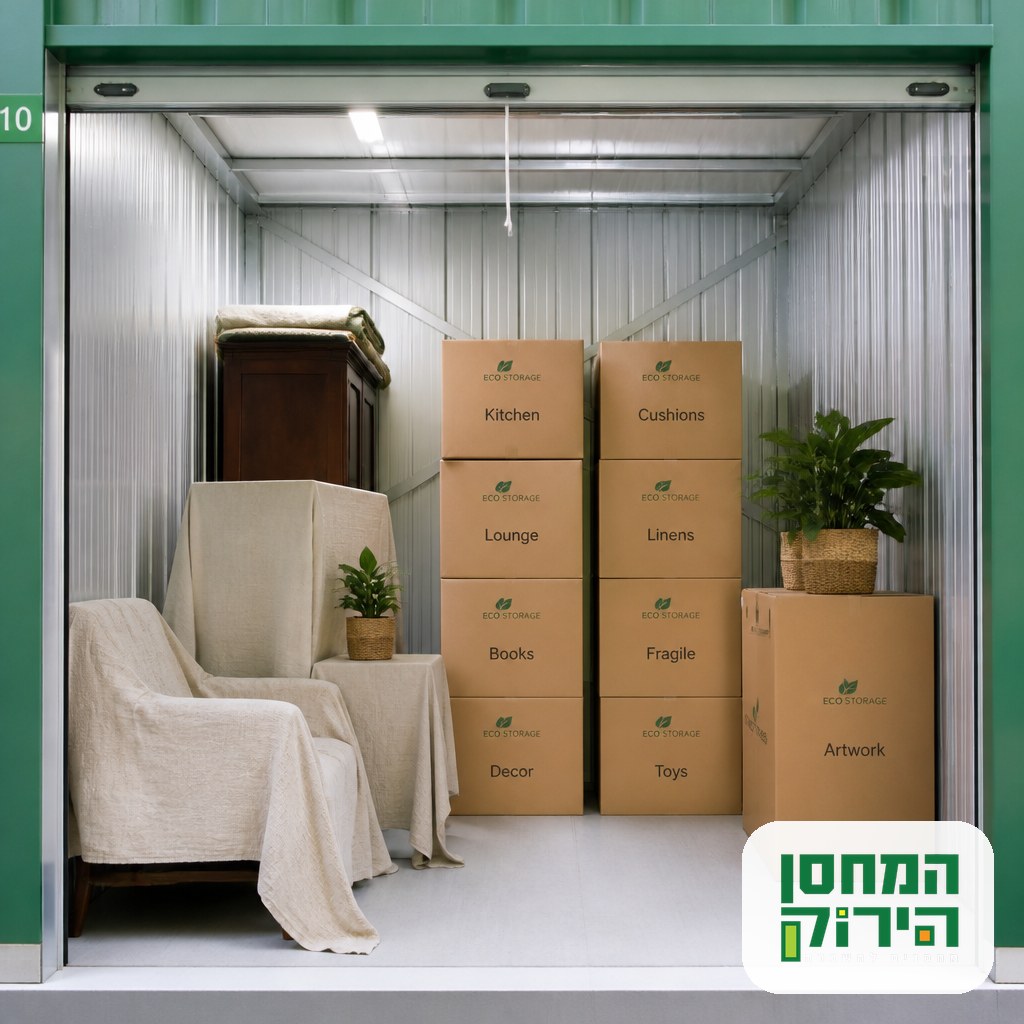
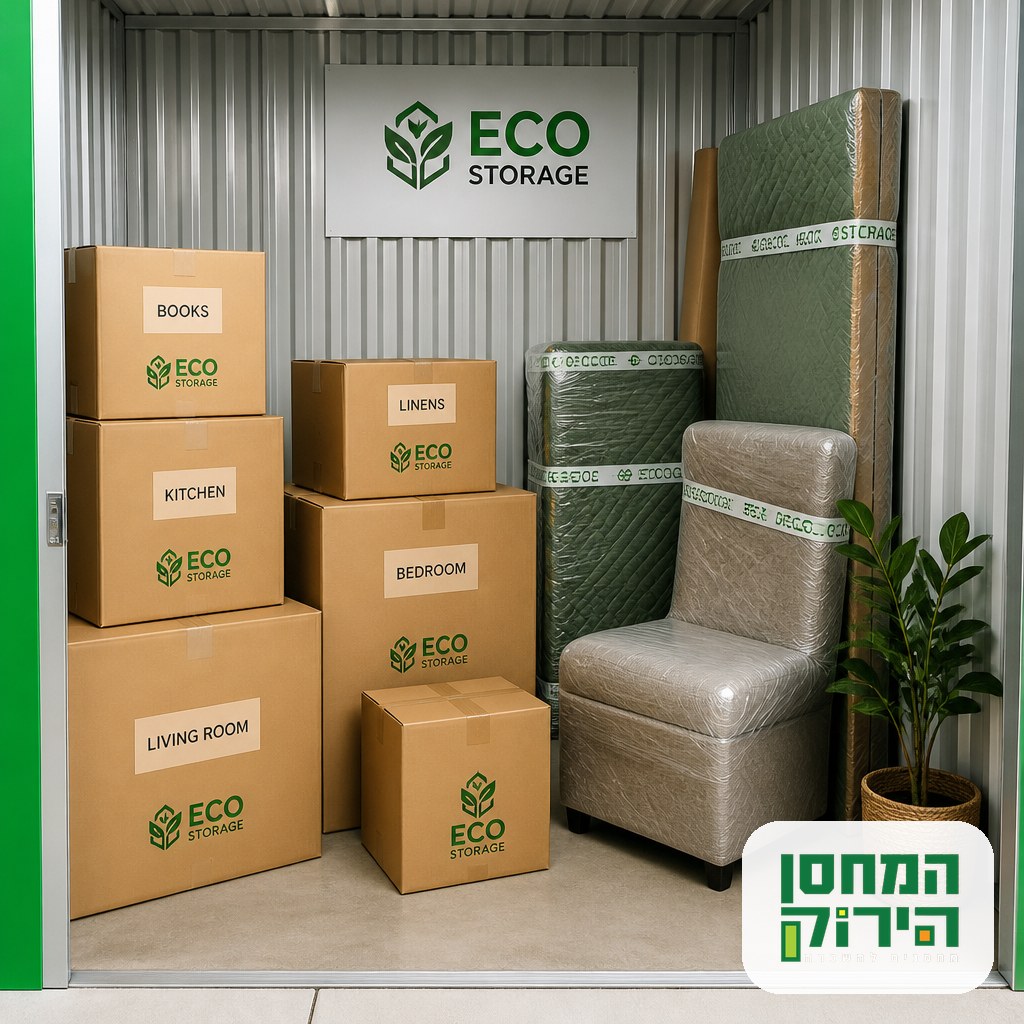
Downsizing in Israel almost always produces more furniture than the new apartment can hold, and the decision about what to do with it tends to arrive in the last fortnight before the move. A couple sells the house in Raanana once the children have left, a family gives up a four bedroom rental in Herzliya for a three room flat in Tel Aviv, or olim who shipped a full container years ago finally admit half of it was never opened. The question is always the same: some of what you own is going to the new place, some is going out of your life, and quite a lot sits in between.

An ordinary move is a logistics problem: everything goes onto the truck and comes off at the other end. Downsizing is a different problem, because the new apartment sets a hard limit. Three rooms do not absorb the contents of five, a flat without a storeroom does not absorb what the old machsan held, and a balcony is not a garden. The surplus is not bad planning, it is arithmetic.
The trouble is that the arithmetic and the emotional decisions land in the same fortnight. Two weeks before the lift arrives you are asked to rule on a dining table that has hosted twenty years of Friday nights, on a bedroom set belonging to a child now living in Berlin, and on boxes of books nobody catalogued. Decisions taken in that window follow the shortage of space rather than what you actually want.
A storage unit breaks the two decisions apart. What fits goes into the apartment, what does not goes into a locked unit, and the final calls are made a few months later, once you know how the smaller place actually lives. That is the real value of storage here: it buys back the time a hard floor area took away from you.
The reason behind the move shapes how much will be left over and how long you are likely to need a unit.
This is the most common case and it produces the largest surplus. The rooms the children left behind still hold beds, desks, wardrobes and shelving, usually with boxes that were never collected. Part of that is genuinely the next generation’s property and is meant to move on to them at some point; part is yours and simply has nowhere to go. A house with a storeroom and a garden also accumulates tools, garden furniture and sports gear that a flat cannot absorb at all.
Inside a cupboard, an item that has fallen out of use and one that was merely pushed aside look identical, and they need completely different handling. Something genuinely finished should be sold, given away or recycled now, because storing it only postpones the same decision at a cost. Something pushed aside, such as a dinner service used twice a year or a desk that worked well until the room became a study, is exactly what storage is for. The question that separates them is what you would take out of the box in the coming year if you had the space.
If you are stuck on dozens of small things, give yourself a fixed allowance: three boxes for documents, photographs and keepsakes, and personal items you will not part with. Everything else has to justify itself by use. The allowance keeps a unit from quietly becoming the place where undecided things live for a decade.

A container shipped during aliyah was packed for a life nobody could predict yet, often in a house with twice the floor area of an Israeli apartment. Years later, downsizing exposes what never fitted in the first place: oversized furniture, appliances bought for different voltage or plumbing, and crates that have changed address twice unopened. There is also a practical point here. If part of the family is abroad when the apartment is cleared, somebody on the ground needs an inventory they can work from, which makes labelling and a photographed list more important than usual.
Not every downsizing involves selling. Rents in Tel Aviv, Jerusalem and the Sharon push plenty of households into a smaller flat without any change in family size, sometimes at short notice when a landlord declines to renew. Here the time pressure is worst, and the surplus is mostly good furniture that will be needed again in the next apartment. Storing it for a year while you look is almost always cheaper than replacing it.
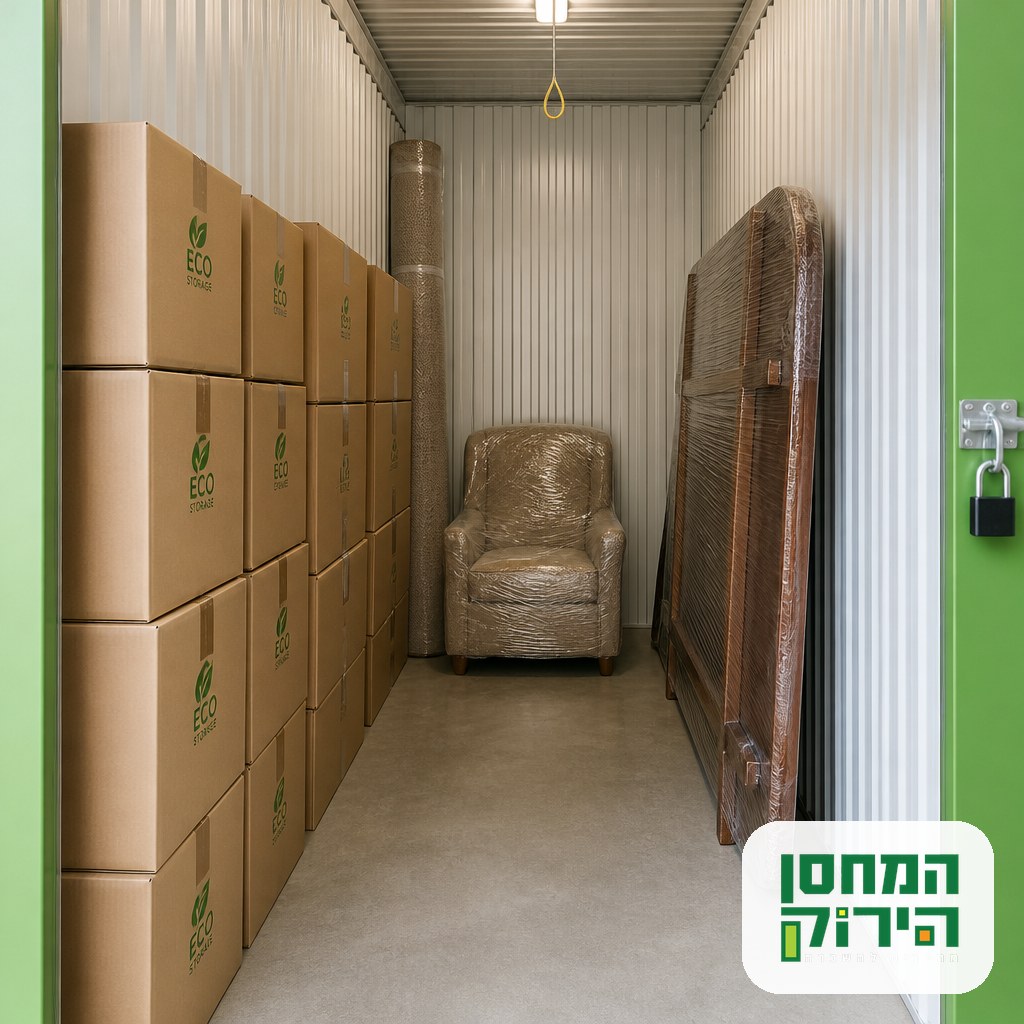
The common mistake is taking the smallest unit the surplus can be forced into. Once it has to be forced there is no walking aisle, and you cannot retrieve one box without unloading half the unit. When the contents will wait months, access matters as much as volume:
Work from the list of large items rather than the number of boxes, because the furniture decides the volume. You can compare the models and their exact dimensions against your own list on the page for storage units in Israel before you commit to a size.
Storage earns its keep when it has an end date. Three commitment tracks are available, with no commitment at all, six months to a year, and over a year, and the right one depends on how firm your plan is. People moving into a flat they have already bought usually know within three months what it can hold, and a flexible track suits them. Families waiting for children to take their belongings are better served by a longer one. Either way, put a review date in the calendar.
Packing for storage is not packing for a move. In a move the box opens three days later and partial labelling costs nothing. After six months it is opened by someone who remembers nothing of packing day, sometimes a relative sent for one specific thing. A sequence that works:
Uniform boxes make a real difference to how much fits and how well it stacks, and the packing supplies in our shop cover the standard sizes, tape and protective materials. Buying the right boxes once is cheaper than the volume that odd shaped cartons waste.
If you expect to visit while the dust settles in the new apartment, check the opening hours of the branch first. Florentin in Tel Aviv, Kiryat Anavim near Jerusalem and Kibbutz Yakum in the Sharon are open for access during branch opening hours, with Yakum open seven days a week from early morning until late evening and entry on your own key without an appointment, while the Kibbutz Galuyot branch in Tel Aviv offers 24/7 access to the units. Locations and hours are set out on the branches page.
Two other things are worth confirming. Units sit inside a closed building, raised off the floor, and close with your own lock, and every branch has closed-circuit cameras and alarm systems connected 24/7 to a security and patrol dispatch centre. And some things never go in at all: fresh or perishable food, flammable and hazardous materials, gas, fuel, plants and animals. Clearing a house turns up paint, thinners and half empty canisters, which have to be disposed of properly.
Downsizing works when the floor area of the new place decides what moves in, and a locked unit holds the rest until you can decide about it properly. Take a size that leaves a walking aisle, pick a branch whose hours match the visits you will realistically make, label as though a stranger will open the boxes, and set a review date so the unit stays a stage and not a habit. For help matching a unit to the furniture that will not fit, contact Green Storage with your list of large items, and you can see the models and tracks on the storage price list first.
Most households need between six months and two years. Three months is usually enough to learn what the smaller apartment can really hold, but the remaining decisions, such as children collecting their belongings, take longer. The tracks run from no commitment at all to over a year, so match the track to your realistic plan rather than the optimistic one.
For good quality furniture you will certainly use again, storing is almost always cheaper: a fast sale recovers a fraction of the value, and replacing the same item later costs full price. For worn or bulky things you are unlikely to want in a smaller home the opposite is true. The test is whether the item will come out of the box within the year.
Contents insurance is not part of the rental price. It is bought as an add-on covering the full declared value of what you store, at a rate of 1.8 per 1,000 of declared value, and the cover is comprehensive and includes earthquakes. When a unit holds the furniture and appliances of a whole household, declare a realistic value rather than a low one.
The unit closes with your own lock, so nobody without a key can open it. If there is any chance a relative will need to fetch or add something while you are out of the country, arrange it with the office in advance and leave them an up to date inventory. Organising it in real time from another time zone turns a small request into a week of calls.
Treat them as a separate category with their own deadline, not as part of your own sorting. Photograph the items, send the list to whoever they belong to, and agree a date by which they are collected or released. Storing them is reasonable meanwhile, but without an agreed date that category is the one most likely to keep a unit rented for years.

How can we help you today?