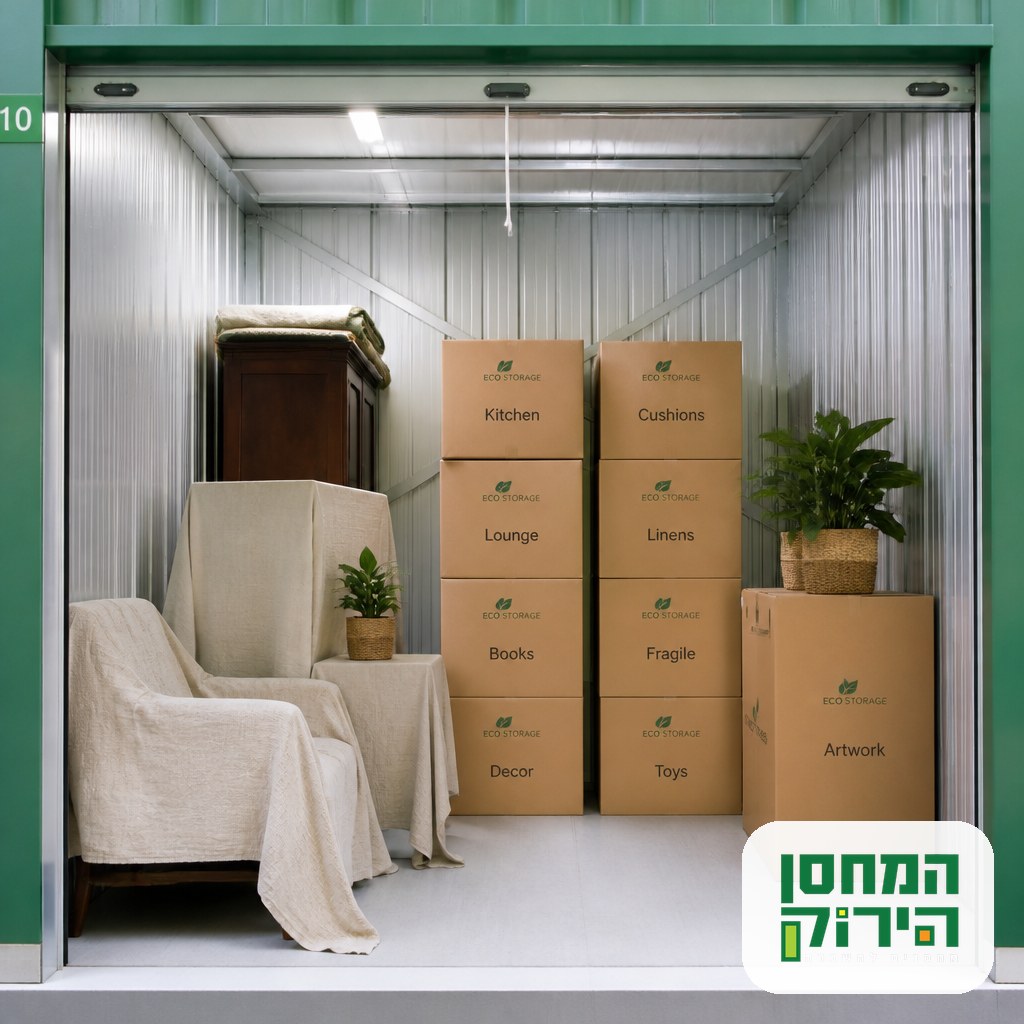
Sofa storage sounds like the easy part of a move, right up until the sofa comes back. A couch is not one object but several: a timber or steel frame, a suspension system of springs or webbing, foam of varying densities, and an outer skin of fabric or leather. Each layer reacts differently to pressure, humidity and time. Put a sofa into a unit unprepared and it can come out months later with a permanent dip in a cushion, a smell it picked up along the way, or a frame weakened under the boxes stacked on it. This guide covers how to clean it, wrap it, position it and avoid the mistakes that cause most of the damage.
Most furniture is made mainly of one material, and a wooden table or a metal chair behaves predictably in a unit. A sofa combines materials with opposite properties: wood that absorbs and releases moisture, metal that can corrode, porous foam that traps odours, and fabric or leather that reacts to temperature swings. Give that combination a few months in the wrong conditions and every small weakness has time to develop.
Foam is the first thing to go. Cushion filling is designed to recover from short compression, not from months of continuous load. A cushion left squashed under weight loses part of its volume, and the recovery is not always complete once the pressure comes off. That is why the central rule of storing seating is simple: nothing goes on top of the seat or the backrest, ever.
Humidity is the second factor, and in Israel it deserves particular attention. Along the coastal strip the air carries far more moisture than most people expect, and upholstery absorbs it readily. A couch stored in a poorly ventilated space, or sealed inside plastic that trapped residual damp, can develop dark patches along the seams while still looking fine from the front.
Good preparation starts about a week before moving day, because drying properly after a clean takes time. The order is clean, dry, dismantle, then wrap. Skipping a step is the most common reason people are disappointed when they open the unit.
Not every fabric is cleaned the same way, and the wrong product can leave a permanent mark right before a long period when nobody is there to treat it. Check the manufacturer label, usually under the seat deck or a cushion, and follow it.
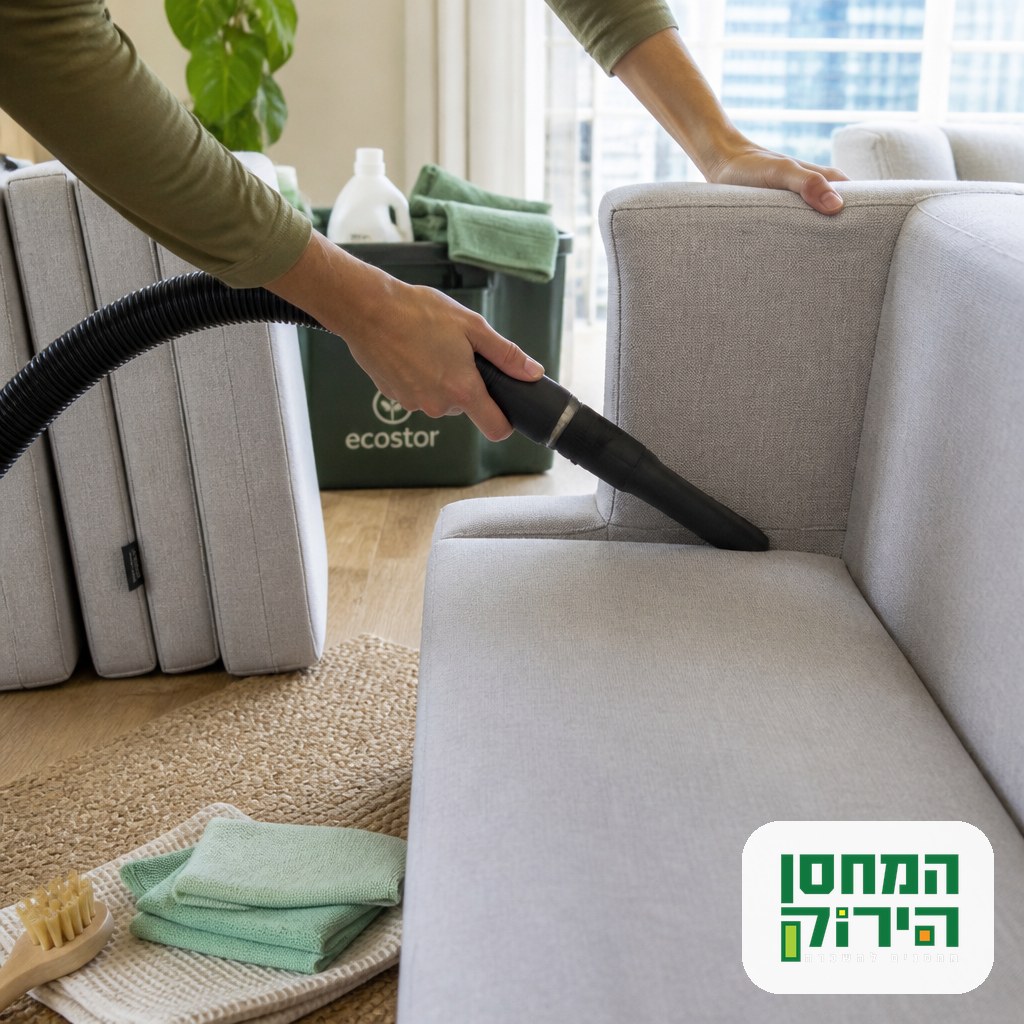
With fabric, begin with a thorough vacuum, including the seams and the deck under the cushions. Crumbs and dust left in seams attract pests and worsen odours over time. Then clean with a barely damp cloth and a gentle upholstery cleaner, testing on a small hidden area first. Velvet needs an especially light touch, since hard rubbing leaves shine marks running with the pile.
Organic stains are the real problem. Food residue, sweet drinks, milk and pet accidents contain proteins and sugars that break down slowly, generate smell and feed insects. A stain that looks nearly invisible in a bright living room can turn into a dark, sharp smelling patch after six months in a closed unit. Treat every stain before wrapping.
The wait after cleaning matters as much as the cleaning. Leave the sofa in a ventilated room, with a window open or a fan pointed at it, for one to two days. Check the seams, corners and underside, where moisture lingers longest. If a surface feels cool or damp, it is not ready. Wrapping damp furniture is the classic recipe for mould.
Most seating comes apart at least partially, which cuts the volume and lowers the risk of a break in transit. The smaller the pieces, the easier they are to carry through doorways without dragging. Work in this order:
If the couch is going in together with the rest of a household, plan the whole load at once rather than piece by piece. People arriving on aliyah, or moving between rentals, often store an entire apartment at short notice, and thinking the layout through in advance is what keeps large items from being wedged into awkward corners. Our full range of storage services covers a whole household move as well as a single item.
The wrapping material affects the final condition of the sofa more than anything else. The principle is simple: the cover should stop dust and scratches while letting air move through. A sealed wrap holds residual moisture against the upholstery and creates a small greenhouse around it.
Leather asks for separate treatment. Wipe it with a dry cloth and apply a conditioner suited to that hide, so it does not dry out and crack while nobody is sitting on it. Here too the outer layer should be breathable fabric, not plastic pressed against the surface. If you need blankets, covers or boxes for the rest of the load, our packing materials shop carries the basics.
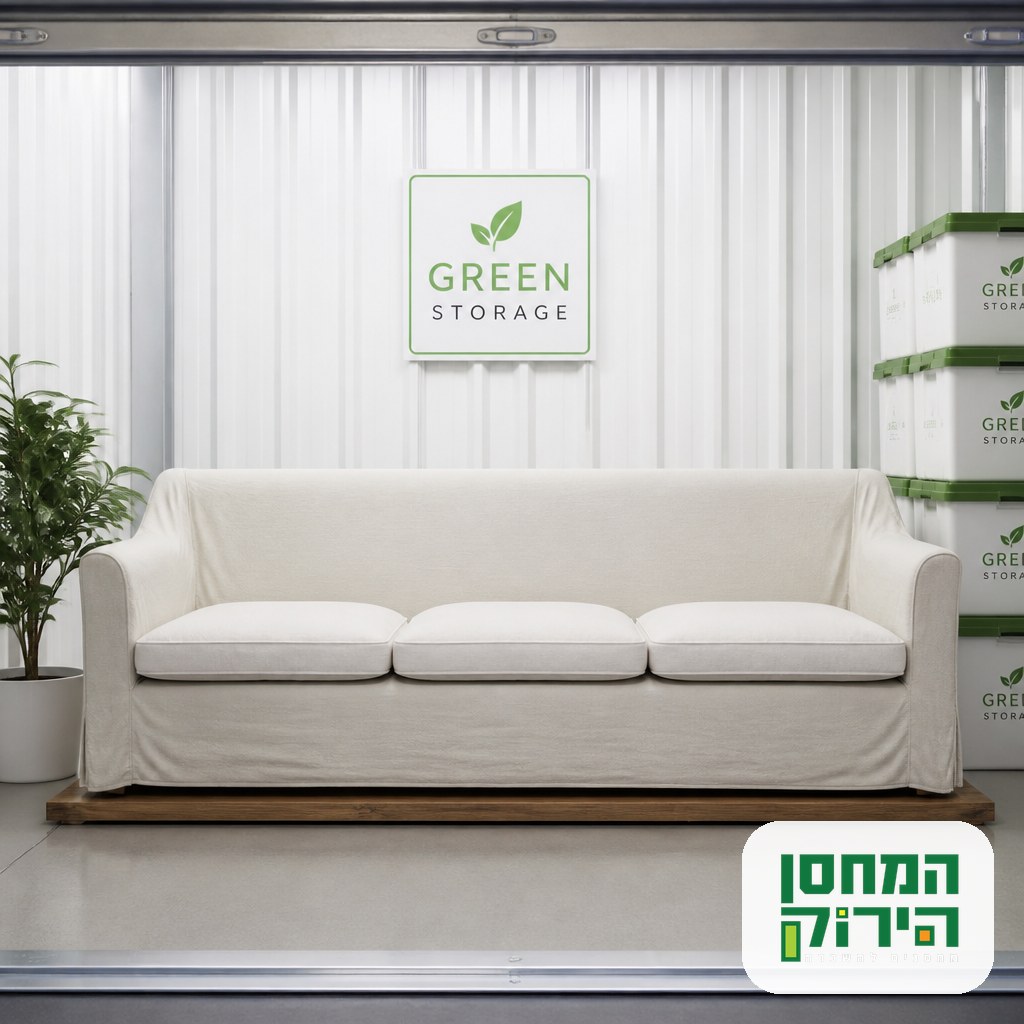
Once the sofa is clean, dry and wrapped, one part is still underestimated: where exactly it stands. The largest item goes in first, along a wall, leaving a clear walkway so you can reach the rest without shifting it on every visit.
Lift the sofa off the floor. A pallet or a set of battens creates an air gap and prevents contact with cold concrete, where humidity concentrates. That gap also ventilates the underside, the area you are least likely to inspect.
On orientation: standing a sofa on its end saves floor space and is therefore tempting, but it puts the entire weight onto a point that was never designed to carry it. On modular sofas, sofa beds and anything with a recliner mechanism, that position can distort the frame over time. Unless the manufacturer explicitly allows it, leave the sofa the right way up and save space elsewhere, by using the height of the unit with shelving and stacking boxes around the furniture rather than on it.
Timing matters too. Rental turnover in the centre of the country clusters into a few months of the year, and units in convenient locations fill up in exactly those weeks. If you are storing between apartments, look at apartment storage in Tel Aviv early rather than in the final week, so you choose a unit on size and conditions instead of on whatever is left.
Most of the damage we see is not an unusual accident. It comes from the same handful of mistakes repeating. Knowing them in advance prevents nearly all of it:

There is no built in time limit. A sofa prepared properly and kept in a dry, ventilated space can stay a very long period without damage. What decides the outcome is the preparation and the conditions in the facility, not the number of months. The longer the period, the more weight you should give to stable conditions and protection from extreme heat and humidity, which matters if you are abroad for a year or two and cannot check on things yourself. It is also worth confirming that valuable furniture is covered by comprehensive insurance for stored belongings, including earthquakes.
Storing seating well comes down to four principles: clean and dry it completely before wrapping, use a breathable cover rather than sealed plastic, raise it off the floor and put nothing on the seat, and keep it dry and ventilated. An hour of preparation prevents damage that often cannot be undone. If you are planning to move a sofa or a whole apartment into storage and want to be sure it is kept in the right conditions, talk to our team and we will help you match the unit size and the terms to what you actually need.
Wrapping upholstery in sealed plastic is not recommended. Plastic stops residual moisture evaporating and creates a closed environment that encourages mould and odours. Use moving blankets, cotton sheeting or purpose made fabric covers instead, which keep dust and scratches off while still letting air circulate.
It is possible with some models for short periods, but it should not be your default. Standing a sofa on its end concentrates the whole weight on a point that was not built to carry it, and on modular sofas, sofa beds and recliners it can distort the frame. Unless the manufacturer allows it, keep the sofa upright on a raised base.
Take them off and store them separately, laid flat, with no weight on top and without compressing them into vacuum bags. Rest them on the sofa inside a fabric cover, or on a clean shelf. Prolonged compression damages foam recovery, and the volume does not always come back fully.
Wipe the leather with a dry, soft cloth, apply a conditioner suited to that hide and let it absorb before wrapping. Cover it in breathable fabric rather than plastic, and keep it away from external walls and bare concrete. Leather stored too dry can harden and crack, so stable conditions matter more than for fabric.
One to two days in a ventilated room, and longer if the clean was wet or the weather is humid. Check the seams, corners and underside before wrapping. If a surface feels cool or damp, wait. Wrapping furniture that is not completely dry is the most frequent cause of mould in storage.
Cost depends mainly on the volume your belongings occupy and how long you need the unit, so a single couch and a full living room set are not priced the same way. Estimate the total volume you need and check the current price list, or send us your item list and we will match a unit size to it.

How can we help you today?